ZD ZD2NV300SK-A001 Nerve Motor Reversible NV2R6N-S200R-A002 Y-7
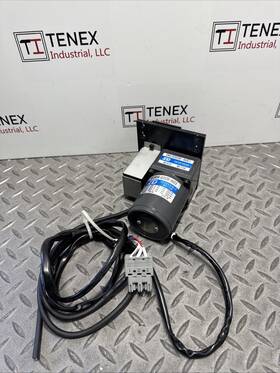
( Brand: Zd ), ( Manufacturer Part Number: ZD2NV300SK-A001 ), ( Part Type: Motor ), ( Reversible/non-reversible: Reversible )
Review ZD 2nv300sk-a001 Nerve Motor Reversible Y-7
The **ZD ZD2NV300SK-A001 (2NV300SK-A001) Nerve Motor** paired with the **NV2R6N-S200R-A002 Reversible Y-7** encoder forms a high-performance, intelligent servo drive system designed for precision motion control in industrial automation, robotics, and advanced manufacturing applications. This integrated solution combines cutting-edge servo technology with a reversible encoder for seamless bidirectional feedback, ensuring exceptional accuracy, responsiveness, and reliability in dynamic motion profiles. The **ZD2NV300SK-A001** is a compact yet robust servo drive engineered to deliver high torque output (up to 300 Nm) while maintaining energy efficiency through advanced vector control algorithms. Its modular design allows for easy integration into existing control systems, supporting protocols such as EtherCAT, CANopen, and Modbus RTU for seamless communication with PLCs, CNC machines, and other industrial controllers. The drive s high-resolution, **NV2R6N-S200R-A002 Reversible Y-7** encoder featuring a 2000-line incremental configuration with bidirectional feedback enables precise position, velocity, and torque control, reducing backlash and improving repeatability in high-speed applications. This encoder s reversible design eliminates the need for mechanical switches or additional wiring, simplifying system setup while enhancing durability in harsh environments. Together, this servo drive and encoder combination excels in applications requiring smooth acceleration, deceleration, and positional accuracy, such as packaging machinery, CNC milling, robotic arms, and automated assembly lines. The system s compact footprint, high efficiency, and support for advanced motion algorithms including S-curve profiling and torque ripple minimization make it an ideal choice for manufacturers seeking to optimize productivity while maintaining operational precision. Whether deployed in a high-volume production environment or a custom automation project, this servo drive and encoder pairing delivers a balance of performance, flexibility, and long-term reliability.
### **Pros and Cons of buying a ZD-ZD2NV300SK-A001 (2NV300SK-A001) Nerve Motor with NV2R6N-S200R-A002 Reversible Y-7 Connector**
This product appears to be a **variable frequency drive (VFD) motor system**, specifically a **Nerve Motor (2NV300SK-A001)** paired with a **reversible Y-7 connector (NV2R6N-S200R-A002)**. Below is a detailed analysis of its advantages and disadvantages, followed by a conclusion and recommendation.
---
### **Pros**
1. **High Efficiency and Energy Savings**
- The Nerve Motor (2NV300SK-A001) is likely designed with advanced motor control technology, such as **vector control or field-oriented control (FOC)**, which optimizes energy consumption by adjusting motor speed and torque dynamically.
- Variable frequency drives (VFDs) reduce energy waste compared to traditional constant-speed motors, leading to significant cost savings over time, especially in applications like pumps, fans, and conveyors.
2. **Precision Control and Performance**
- VFDs allow for **smooth acceleration, deceleration, and speed adjustment**, reducing mechanical stress on the system and extending equipment lifespan.
- The **reversible Y-7 connector** suggests compatibility with bidirectional operation, useful in applications requiring forward/reverse motion (e.g., cranes, mixers, or automated machinery).
3. **Reduced Mechanical Wear and Noise**
- Soft-start and soft-stop capabilities minimize mechanical shocks, reducing wear on belts, gears, and bearings.
- Lower operating speeds (when needed) reduce noise levels compared to fixed-speed motors running at full capacity.
4. **Compatibility with Modern Automation**
- Many VFDs (including this model) support **PLC integration, remote monitoring, and communication protocols** (e.g., Modbus, Profibus, or Ethernet/IP), making them suitable for industrial automation and IoT applications.
- The **Nerve Motor** branding may imply smart features like **predictive maintenance alerts** or remote diagnostics.
5. **Long-Term Cost Efficiency**
- While the upfront cost may be higher than a standard motor, the **energy savings, reduced maintenance, and extended equipment life** often justify the investment over time.
- Some VFDs include **built-in protection features** (overload, short-circuit, overheating), reducing downtime.
6. **Scalability and Flexibility**
- VFDs can be adjusted for different load requirements, making them adaptable to varying production needs.
- The **reversible design** expands functionality for applications requiring bidirectional operation.
7. **Environmental Benefits**
- Lower energy consumption contributes to **reduced carbon footprint**, aligning with sustainability goals in industrial settings.
---
### **Cons**
1. **Higher Initial Cost**
- The upfront price of a **VFD-equipped motor system** (especially one with advanced features like the Nerve Motor) is significantly higher than a standard induction motor.
- Additional costs may include **installation, wiring, and potential programming** for optimal performance.
2. **Complexity in Installation and Setup**
- VFDs require **proper wiring, programming, and commissioning**, which may necessitate specialized technical expertise.
- Misconfiguration can lead to **poor performance, motor damage, or system failures**, requiring professional assistance.
3. **Potential for Electrical Noise and EMI**
- VFDs generate **electromagnetic interference (EMI)**, which can affect nearby sensitive electronics or communication systems.
- Proper **shielding and filtering** may be required to mitigate interference.
4. **Maintenance Requirements**
- While VFDs reduce mechanical wear, they introduce **electrical components that may require periodic maintenance**, such as:- Cleaning cooling fans and heat sinks.
- Checking and replacing capacitors or filters.
- Updating firmware if the manufacturer releases improvements.
- The **Y-7 connector** (if not high-quality) may require periodic inspection for wear or corrosion.
5. **Compatibility Issues**
- Not all motors are compatible with VFDs **impedance matching** and **voltage/current ratings** must align to avoid damage.
- The **Nerve Motor (2NV300SK-A001)** may have specific requirements; verifying compatibility with the VFD and load is critical.
- Some older systems may lack the infrastructure to support advanced VFD features.
6. **Power Quality Dependence**
- VFDs are sensitive to **voltage fluctuations, harmonics, and poor power quality**, which can degrade performance or shorten lifespan.
- A **stable power supply or additional filtering** may be needed in environments with unreliable electricity.
7. **Potential for Overkill in Simple Applications**
- For **low-load, constant-speed applications** (e.g., small fans or pumps with minimal speed variation), a VFD may be **unnecessary**, making a standard motor more cost-effective.
8. **Warranty and Support Considerations**
- Some manufacturers offer **limited warranties on VFDs**, and repairs or replacements may require **extended service contracts**.
- If the system fails, **parts availability** (especially for niche models like the Nerve Motor) could be a concern.
---
### **Conclusion**
The **ZD-ZD2NV300SK-A001 Nerve Motor with NV2R6N-S200R-A002 reversible Y-7 connector** represents a **high-performance, energy-efficient motor solution** ideal for applications requiring **precise speed control, bidirectional operation, and long-term reliability**. Its advantages in **energy savings, reduced mechanical stress, and automation compatibility** make it a strong choice for industrial, commercial, or automated systems where efficiency and flexibility are critical.
However, the **higher upfront cost, complexity of installation, and maintenance requirements** mean it is **not suitable for all applications**. It is particularly well-suited for:
- **Pumps and compressors** (where variable speed reduces energy waste).
- **Conveyor systems and material handling** (where soft-start/stop extends equipment life).
- **Automated machinery** (where bidirectional control is needed).
- **Energy-intensive operations** (where long-term savings justify the investment).
For **simple, low-load, or constant-speed applications**, a standard motor may be more economical. Additionally, **verifying compatibility with the VFD, load, and power supply** is essential to avoid performance issues.
---
### **Recommendation**
**Buy this system if:**You operate in an **industrial or automated environment** where **energy efficiency, precise control, and bidirectional operation** are beneficial.
Your application involves **variable loads** (e.g., pumps, fans, mixers) where a VFD can **reduce wear and energy consumption**.
You have **access to technical expertise** for installation and programming, or are willing to invest in training.
Long-term **cost savings and equipment longevity** outweigh the higher initial investment.
**Avoid or reconsider if:**Your application requires **only constant-speed operation** with minimal load variation.
You lack **expertise in VFD setup and maintenance**, or cannot afford professional installation.
The **power supply is unstable**, and additional filtering is not feasible.
The **budget is tight**, and a standard motor would suffice for your needs.
**Final Suggestion:**- **Request a detailed specification sheet** from the manufacturer to confirm compatibility with your motor, load, and power system.
- **Compare total cost of ownership (TCO)** calculate energy savings, maintenance costs, and expected lifespan against the upfront price.
- **Consult an electrical engineer or VFD specialist** if unsure about installation or programming requirements.
- **Consider a reputable brand with strong after-sales support** to ensure reliability and warranty coverage.
This system is a **strong investment for the right application**, but due diligence is essential to maximize its benefits.
Details:
ZD 2NV300SK-A001 Nerve Motor W/NV2R6N-S200R-A002 Reversible.
part #: nv2r6n-s200r-a002 price
- $400.00
specifications oelemot:
- brand: Zd
- mpn: Zd2nv300sk-a001
- part type: Motor
- reversible/non-reversible: Reversible
returns oelemot:
- policy: Returns Accepted
- method: Money back
- time: 30 Days
- paid by: Seller
offer oelemot:
- best offers: True
- options: Ship-to-home
- quantity: 1
- sold: 0
- started: April 29, 2026
- availability: In Stock
seller oelemot:
- # reviews: 891
- city: Lancaster, Pennsylvania
- rating: 100.0%
general oelemot:
- Industrial Automation Motion Controls > Electric Motors > General Purpose Motors
- condition: Used
payments oelemot:
- wallet: Paypal
- other
- credit card: Mastercard
shipping oelemot:
- type: Calculated
- class: Standard
- transit: 2-6 Days
- cost: $27.05
- carrier: UPS
- service: UPS Ground
Zd ZD2NV300SK-A001 Is Similar To:
- Zd 5ik90gn-af Induction Motor With 5gn Gearhead (38.8% similar) Part #: Zd 5IK90GN-AF for sale...(October 14th, 2025)
- Indramat Mac90a-0-zd-2-c 110-a-0 s01 Servo Motor Remanufactured 1 Yr Wrty (32.3% similar) Ac servo motor. Manufacturer: undramatic. This means that the undramatic MAC90A-0-ZD-2-C/110-A-0/S01 MAC90A0ZD2C110A0S01 is used but has been restored by our expert techs and comes with a 1 year warranty. Friendly, knowledgeable techs that answer your calls and take time to help you. Servo amplifier...(December 19th, 2025)
- Zd Z52bldpn2460-30s 24vdc 60w 3000rpm Dc Motor Gear Head 3.8a Ip20 Keyed Shaft (32.5% similar) Like new condition. Brand: Zd motor item was installed but never operated...(April 6th, 2026)