YASKAWA V80Q7N-Y2 Phase Vs Induction Motor T209821
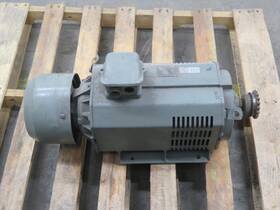
( Brand: Yaskawa ), ( Manufacturer Part Number: V80Q7N-Y2 ), ( Part Type: Motor )
Review YASKAWA Phase Vs Induction Motor
The **Yaskawa V80Q7N-Y2** is a high-performance, variable-speed **T209821** series induction motor designed for demanding industrial applications where precision, efficiency, and reliability are paramount. Engineered with Yaskawa s advanced motor control technology, this **three-phase AC induction motor** combines robust construction with intelligent digital integration, making it an ideal choice for automation systems, HVAC, pump control, and conveyor applications. The motor features a **T-frame design (T209821)**, providing a compact yet sturdy form factor that optimizes space utilization in tight industrial environments while maintaining exceptional mechanical strength. With a **rated power output of 7.5 kW (10 HP)**, it delivers consistent torque across a wide speed range, ensuring smooth operation even under variable load conditions.
At its core, the **V80Q7N-Y2** incorporates Yaskawa s **vector control technology**, enabling seamless acceleration, deceleration, and precise speed regulation with minimal energy loss. This intelligent control system enhances efficiency by reducing unnecessary power consumption during startup and operation, while also extending the motor s lifespan through optimized thermal management. The motor s **IP55 protection rating** ensures robust defense against dust, dirt, and splashing water, making it suitable for harsh manufacturing and outdoor environments. Additionally, its **Class F insulation** and **high-temperature resistance** components allow for extended operation in elevated ambient conditions without compromising performance.
The **V80Q7N-Y2** is equipped with **Yaskawa s proprietary inverter-friendly design**, ensuring seamless compatibility with the brand s **Sigma-5, Sigma-7, or other advanced variable frequency drives (VFDs)**. This integration eliminates harmonic distortion, reduces mechanical stress, and enhances overall system reliability. The motor s **bearing system** incorporates high-quality sealed ball bearings with a **grease lubrication system**, minimizing maintenance requirements while maximizing operational uptime. Furthermore, its **low-noise operation** and **vibration-dampening construction** contribute to a quieter, more stable industrial workspace, reducing fatigue for nearby equipment and personnel.
For applications requiring **remote monitoring and predictive maintenance**, the **V80Q7N-Y2** can be paired with Yaskawa s **iQ-F Series inverters**, which offer built-in diagnostics, real-time performance analytics, and connectivity options via **Ethernet, Profibus, or Modbus**. This level of smart integration allows operators to track motor health, detect potential failures before they occur, and optimize energy usage ultimately reducing downtime and operational costs. Whether deployed in **conveyor systems, water treatment plants, or industrial automation**, this motor exemplifies Yaskawa s commitment to **innovation, durability, and energy efficiency**, making it a premium choice for modern industrial applications.
### **Comparison of Yaskawa V80Q7N-Y2 (Variable Frequency Drive with Phase Motor) vs. Induction Motor T209821 (Direct Drive)**
#### **Yaskawa V80Q7N-Y2 (VFD Phase Motor Setup)**
**Pros:**1. **Energy Efficiency** A VFD allows precise control of motor speed, reducing energy consumption by matching output to demand. This is particularly useful in applications with variable loads (e.g., pumps, fans, conveyors).
2. **Soft Start/Stop** Eliminates mechanical stress on the motor and connected equipment by gradually ramping up speed, extending equipment lifespan.
3. **Variable Speed Control** Enables adjustment of motor speed to optimize performance for different operational conditions, improving process efficiency.
4. **Protection Features** VFDs include built-in protections against overcurrent, overheating, voltage spikes, and phase imbalances, reducing downtime.
5. **Reduced Wear & Tear** Smooth acceleration and deceleration minimize mechanical stress on belts, gears, and bearings.
6. **Scalability** Can be easily integrated into larger automation systems with PLCs or SCADA for remote monitoring and control.
7. **Lower Operating Costs** Over time, energy savings and reduced maintenance costs often offset the higher initial investment.
**Cons:**1. **Higher Initial Cost** The VFD and compatible motor setup is more expensive upfront compared to a standard induction motor.
2. **Complexity in Installation & Maintenance** Requires proper wiring, programming, and troubleshooting knowledge. Poor setup can lead to issues like harmonic distortion or motor damage.
3. **Harmonic Distortion Risks** VFDs introduce harmonics into the electrical system, which can interfere with other equipment or require additional filtering (e.g., reactors, capacitors).
4. **Motor Compatibility Issues** Not all motors are VFD-compatible; specialized motors (e.g., high-efficiency or VFD-rated) may be needed, adding cost.
5. **Space Requirements** VFDs generate heat and may require additional ventilation or cooling solutions.
6. **Potential for Overkill** If the application rarely varies in speed (e.g., constant-speed machinery), a VFD may not provide sufficient justification for its use.
---
#### **Induction Motor T209821 (Direct Drive)**
**Pros:**1. **Lower Upfront Cost** Simpler, direct-drive induction motors are cheaper to purchase and install.
2. **Reliability & Simplicity** No additional control electronics mean fewer points of failure. Induction motors are robust and require minimal maintenance.
3. **No VFD Dependency** Works with standard AC power without needing a variable frequency drive, reducing system complexity.
4. **Immediate Speed (Fixed)** If the application requires constant speed (e.g., centrifugal pumps at full load), an induction motor performs reliably without speed variation issues.
5. **Proven Technology** Widely used and well-understood, with extensive troubleshooting resources available.
6. **Lower Maintenance Costs (Short-Term)** No risk of VFD-related failures (e.g., capacitor failure, IGBT damage) that could require servicing.
**Cons:**1. **Energy Inefficiency** Runs at fixed speed regardless of load, wasting energy when partial load operation is needed (e.g., throttling valves in pumps).
2. **Harsh Startup** Direct AC startup can cause high inrush current, leading to mechanical stress and potential damage to belts, gears, or connected equipment.
3. **Limited Control** No ability to adjust speed, torque, or acceleration, which can limit process flexibility.
4. **Higher Operating Costs** Inefficient operation at partial loads can lead to higher energy bills over time.
5. **Reduced Lifespan** Frequent starts/stops or overloads can shorten the motor s lifespan due to mechanical and thermal stress.
6. **Less Adaptable to Automation** Difficult to integrate into modern control systems without additional components (e.g., soft starters, which add complexity and cost).
---
### **Conclusion & Recommendation**
The choice between a **Yaskawa V80Q7N-Y2 (VFD phase motor) setup** and a **direct-drive induction motor like the T209821** depends on the specific application requirements:
- **Choose the VFD Phase Motor Setup If:**- Your application involves **variable speed or load conditions** (e.g., pumps, fans, conveyors, HVAC systems).
- You prioritize **energy efficiency** and long-term cost savings.
- You need **soft start/stop** to protect mechanical components.
- The system can benefit from **automation, remote monitoring, or integration with PLCs**.
- The **initial investment** can be justified by operational savings over time.
- **Choose the Direct-Drive Induction Motor If:**- Your application requires **constant speed operation** with no need for speed adjustment.
- The **upfront cost** is a critical factor, and energy efficiency is not a priority.
- The system is **simple and low-maintenance**, with minimal risk of VFD-related failures.
- The motor will operate under **stable, full-load conditions** with infrequent starts/stops.
#### **Final Recommendation:**For **most modern industrial applications** especially those with variable loads or energy-saving goals the **Yaskawa V80Q7N-Y2 with a compatible phase motor** is the superior choice. The long-term energy savings, reduced mechanical stress, and operational flexibility typically outweigh the higher initial cost. However, if the application is **simple, constant-speed, and cost-sensitive**, the **direct-drive induction motor (T209821)** may be sufficient.
**Key Consideration:** Conduct a **cost-benefit analysis** comparing:- Upfront purchase and installation costs.
- Energy consumption under typical operating conditions.
- Maintenance and repair frequencies.
- Potential downtime risks.
If the VFD setup can be justified through **energy savings, extended equipment life, or improved process control**, it is the recommended path. Otherwise, the induction motor remains a practical and reliable alternative for fixed-speed applications.
Details:
Glad you stopped by. We proudly sell hard-to-find parts, components, and machines to makers manufacturers.
part #: v80q7ny2 price
- $1499.99
specifications oelemot:
- brand: Yaskawa
- mpn: V80q7n-y2
- part type: Motor
shipping oelemot:
offer oelemot:
- availability: In Stock
- sold: 0
- started: March 9, 2026
- quantity: 1
- best offers: True
- options: Ship-to-home
general oelemot:
- Industrial Automation Motion Controls > Electric Motors > General Purpose Motors
- condition: Used
returns oelemot:
- policy: Returns Accepted
- time: 30 Days
- paid by: Seller
- method: Money back
seller oelemot:
- city: El Paso, Texas
- rating: 99.7%
- # reviews: 21418
payments oelemot:
- wallet: Apple-pay
- other
- credit card: Diners-club
Yaskawa V80Q7N-Y2 Is Similar To:
- 539883-2-1 Yaskawa Minertia Motor (42.4% similar) Yaskawa inertia motor this item is used and or for parts lot AU1...(September 6th, 2018)
- Eelq-5i Yaskawa Ac Turret Motor (38.6% similar) Often these items are priced at only a fraction of their normal cost...(March 27th, 2017)
- Felq-5 Yaskawa 3-phase 200-220 Vac (39.5% similar) On mar at 09:31:06 PDT. Rating: continuous ins. Product photos shown are of a typical item from that lot. If in doubt please by messaging or calling prior to buying 20 x 16 12 inches questions. Approximate shipping weight DIMS55 lbs. 8 amps, 855 rpm technical condition used. This item has been ...(March 13th, 2017)
- Mros10056070-sgmah Yaskawa Ac Servo Motor Rpm New In Box (31.5% similar) If another carrier such as ups or FedEx is required to ship due the size, then shipping costs may change...(October 21st, 2018)
- Pmes-09-r34 Yaskawa Print Motor Cnc (41.4% similar) Used Yaskawa print motor, model PMES-09-R34 dc 26V, shipping weight is 9 lbs. 5A, 4000R m, 100W...(October 7th, 2018)
- Pmes-12af Yaskawa Print Motor Rpm (42.4% similar) 4a 300 r kg. Cm no a brand-new, unused, undamaged item in its original packaging type: PMES-12AF ratio: 1/1 0...(November 9th, 2018)
- R01sakoe Yaskawa Electric Minerita Motor Encoder Tested (39.3% similar) Please e-mail with any questions. Yaskawa encoder electric minority motor R01SAKOE UTOPI-100MX note: units was used on precise robot assembly in clean room environment. Motor was power on tested in working condition. Encoder capped on all the time. Was taken off once only for inspection pictures...(September 3rd, 2018)
- S-n 6p0393-31-4 Yaskawa Servo Motor (36.8% similar) Yaskawa servo motor 750W, 3000 rpm...(December 21st, 2017)
- Sgm-01aw14b Yaskawa Motor Pzo (34.6% similar) 13HP power supply: 200V standard encoder specifications: 12-BIT r absolute revision level: or Ce specification shaft straight with key way options: 90VDC brake this motor is in new condition. Item pictured is the actual being sold. Often these items are priced at only a fraction of their normal cost...(October 10th, 2018)
- Sgmas-04aca4c Yaskawa Ac Servo Motor (36.4% similar) Warranty this item is guaranteed to be as described. 27NM servomotor manufacturer: Yaskawa model: SGMAS-04ACA4C condition: used price: the photos show exact items buyer will receive. Manufacturer: Yaskawa condition: used. Notes: this was removed from a decommissioned machine and not tested ...(July 2nd, 2017)
- Sgmg-30a2a Yaskawa Servo Motor (39% similar) ...(November 13th, 2017)