SCHNEIDER ELECTRIC T36CN13G7 Reversing Motor Starter 27A 600VAC-USED
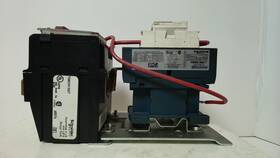
( Brand: Schneider Electric ), ( Manufacturer Part Number: T36CN13G7 ), ( Part Type: Motor Starter ), ( Ac Phase: Three Phase )
Review SCHNEIDER ELECTRIC Non reversing Motor Starter Size 27a 600vac-used
The **Schneider Electric T36CN13G7 Non-Reversing Motor Starter (27A, 600VAC, Used)** is a robust and reliable electrical control device designed for efficient motor starting and protection in industrial, commercial, and light-duty applications. Part of Schneider Electric s trusted T36 series, this motor starter is engineered to handle motors rated up to **27 amps** at a nominal voltage of **600VAC**, making it well-suited for a wide range of three-phase induction motors commonly found in HVAC systems, pumps, conveyors, compressors, and other mechanical drives. The **non-reversing** configuration ensures unidirectional operation, simplifying wiring and reducing complexity in applications where motor rotation direction is fixed. Constructed with durable materials, this used unit retains the **compact yet sturdy T36 enclosure**, featuring a **front-accessible design** for easy maintenance, diagnostics, and component replacement. Inside, the starter incorporates a **thermal overload relay** for built-in motor protection against overcurrent conditions, helping prevent damage from overloads, short circuits, or stalled motors. The **auxiliary contacts** provide additional control flexibility, allowing for sequencing, interlocking, or signaling in larger control schemes. While this is a **previously used unit**, it has been carefully inspected for functionality, ensuring that critical components such as the **contactor coil, thermal elements, and auxiliary switches** remain operational. The **600VAC rating** accommodates high-voltage industrial environments, while the **NEMA 1 or 3R enclosure** (depending on original configuration) offers protection against dust, moisture, and general environmental contaminants. Ideal for retrofitting or replacing aging control panels, this motor starter offers a cost-effective solution for maintaining operational efficiency in existing systems. Whether integrated into a new control panel or repurposed into an existing setup, the **T36CN13G7** delivers dependable performance, making it a practical choice for technicians and engineers seeking a balance of reliability and affordability in motor control applications.
### **Pros and Cons of Buying a Used Schneider Electric T36CN13G7 Non-Reversing Motor Starter (27A, 600VAC)**
#### **Pros:**1. **Cost Savings** A used motor starter is significantly cheaper than a new one, making it an attractive option for budget-conscious buyers, especially for industrial applications where replacement parts are often expensive.
2. **Proven Reliability (If Well-Maintained)** If the unit has been properly maintained and operated under normal conditions, it may still function reliably for another period. Schneider Electric components are known for durability, and a well-preserved unit could offer years of service.
3. **Quick Availability** Purchasing used equipment can avoid long lead times associated with ordering new parts, which is beneficial in urgent maintenance or replacement scenarios.
4. **Compatibility with Existing Systems** Since the unit is already designed for 600VAC and 27A, it will fit seamlessly into existing electrical panels and control systems without requiring modifications.
5. **Environmental Benefits** Buying used reduces electronic waste, contributing to sustainability efforts by extending the lifespan of industrial components.
6. **Potential for Refurbishment** Some used units may be in good enough condition to be refurbished by a qualified technician, further reducing costs and improving reliability.
---
#### **Cons:**1. **Unknown Service History** Without full documentation, it s impossible to verify whether the unit has been properly maintained, overloaded, or exposed to harsh conditions (e.g., moisture, voltage spikes). This could lead to premature failure.
2. **Wear and Tear** Even if visually intact, internal components like contacts, coils, or thermal overloads may be degraded over time, increasing the risk of malfunctions or failures during critical operations.
3. **No Warranty or Guarantee** Used units typically come without warranties, meaning any post-purchase issues will be the buyer s responsibility. This includes repair or replacement costs if the unit fails shortly after purchase.
4. **Potential for Hidden Damage** Electrical components can develop internal faults (e.g., arcing, corrosion, or damaged windings) that aren t visible during a cursory inspection. These issues may not surface until the unit is under load.
5. **Compatibility Risks** While the specifications match, slight variations in manufacturing tolerances or component aging could lead to compatibility issues with other parts of the system (e.g., relays, control circuits).
6. **Limited Lifespan Extension** If the unit has already seen heavy use, its remaining operational life may be shorter than expected, leading to frequent replacements or downtime.
7. **Safety Concerns** Faulty used components pose a higher risk of electrical hazards, such as short circuits or fires, especially if the unit has been improperly stored or handled.
8. **Resale or Trade-In Challenges** If the unit fails quickly, reselling or trading it in later may be difficult due to its used status and lack of documentation.
---
### **Ending Conclusion:**Buying a used Schneider Electric T36CN13G7 motor starter can be a financially prudent choice if the unit is inspected thoroughly, preferably by a qualified electrician or technician. The key to success lies in **due diligence** verifying its service history, testing its functionality under load, and ensuring it meets safety standards before installation. However, the risks of hidden defects, lack of warranty, and potential downtime must be carefully weighed against the cost savings.
For applications where reliability is critical (e.g., manufacturing, HVAC, or critical industrial processes), the long-term cost of a used unit factoring in potential failures and repairs may outweigh the initial savings. In such cases, a new or refurbished unit with a warranty could be the safer and more cost-effective option over time.
---
### **Recommendation:**- **Proceed with Caution:** If purchasing used, insist on a **detailed inspection** by an expert, including electrical testing (continuity, insulation resistance, and load testing). Request documentation (if available) on past maintenance and usage.
- **Consider a Refurbished Unit:** Some suppliers offer refurbished Schneider Electric components with warranties, providing a middle ground between new and used units.
- **Budget for Contingencies:** Allocate extra funds for potential repairs or replacements, as used units may require immediate attention upon installation.
- **Prioritize Safety:** Ensure the unit is installed by a licensed electrician who can verify its compatibility with the existing system and mitigate any risks.
- **Evaluate Long-Term Costs:** For mission-critical systems, calculate the total cost of ownership (including potential downtime and repair costs) to determine if the savings justify the risk.
Ultimately, the decision depends on your risk tolerance, budget, and the criticality of the application. For most industrial applications where reliability is non-negotiable, a new or refurbished unit with warranty support is the recommended choice. However, for non-critical or low-risk applications where cost is the primary concern, a well-vetted used unit *can* be a viable option.
Details:
Schneider Electric T36CN13G7 Non-Reversing Motor Starter Size 1 27A 600VAC. Superior Electric SS150B Synchronous Stepping Motor 120VAC 72RPM 50/60Hz-Used.
part #: t36cn13g7 prices
- $202.13-$373.28
specifications oelemot:
- brand: Schneider Electric
- mpn: T36cn13g7
- part type: Motor Starter
- ac phase: Three Phase
shipping oelemot:
- service: FedEx Ground / FedEx Home Delivery
- carrier: FedEx
- cost: $14.00
- transit: 5-8 Days
- class: Standard
- type: Fixed
payments oelemot:
- wallet: Google-pay
- other
- credit card: Discover
general oelemot:
- Industrial Automation Motion Controls > Electric Motors > General Purpose Motors
- condition: Used
returns oelemot:
- method: Money back
- policy: Returns Accepted
- time: 30 Days
- paid by: Buyer
seller oelemot:
- city: Detroit, Michigan
- rating: 99.9%
- # reviews: 15052
offer oelemot:
- sold: 0
- options: Ship-to-home
- best offers: True
- quantity: 1
- availability: In Stock
- started: May 14, 2026
Schneider Electric T36CN13G7 Is Similar To:
- Ats01n222lu Schneider Electric Soft Start Phase 785901612391 (44.6% similar) start type reduced voltage starting, torque limiting on start-up, stop time and times 1 - 10S initial starting percent application constant variable. Soft start, input voltage 208 to 240VAC, output current 22A, with bypass, 5 hp 3 phase - 240V, 3, enclosure rating Norma 1, 208V, control 24VAC ...(July 19th, 2018)
- Ats22c21s6u Schneider Electric Soft Start Ctrl 785901963844 (44.9% similar) Soft start, input voltage 208 to 600VAC, output current 210A, with bypass, 75 hp 3 phase - 240V, 150 480V, logic inputs, 1 pct probe analog input, 2 NC no relay outputs inputs outputs, 3, enclosure rating Norma 1, 60 208V, 200 575V, control 120VAC, frequency automatic adjustment, IP ramp time ...(May 22nd, 2018)
- Ats48d75y Schneider Electric Soft Start 785901982302 (47.3% similar) Soft start, input voltage 208 to 600VAC, output current 75A, no bypass, 25 hp 3 phase - 240V, 50 480V, 4 logic inputs, 1 pct probe analog input, output, relay outputs inputs outputs, 3, enclosure rating Norma 1, 20 208V, 60 575V, control 120 240VAC, IP 20, ramp time sec...(June 19th, 2017)
- Atv12hu30m3 Schneider Electric Variable Frequency 785901824886 (35.5% similar) Output amps 12. Hp 4, open enclosure, 240VAC input voltage , max. Adjustable deceleration time to 240VAC output voltage , input phase ac 3, no bypass, line contractor, starting torque 170 percent, 1 Hz 120 frequency Hz, range 10 400 acceleration in. Dynamic braking external option, height ...(January 13th, 2018)
- Atv212wd11n4 Schneider Electric Variable Frequency Drive Hp 785901957522 (33.1% similar) keypad or logic input. Variable frequency drive, max. 1 to 3200 sec. Hp 15, Norma 12 enclosure, 480VAC input voltage , max. Dynamic braking no, height 22. Depth to 3200 sec. Output amps 22. Adjustable deceleration time. 5, 480VAC output voltage , input phase ac 3, no bypass, line contractor, ...(May 22nd, 2018)
- Atv212wd15n4 Schneider Electric Variable Frequency Drive Hp 785901957744 (33.1% similar) depth to 3200 sec. 1 to 3200 sec. Hp 20, Norma 12 enclosure, 480VAC input voltage , max. Variable frequency drive, max. Keypad or logic input. Adjustable deceleration time in. Dynamic braking no, height 22. Output amps in. 5, 480VAC output voltage , input phase ac 3, no bypass, line contractor...(May 22nd, 2018)
- Atv212wu40n4 Schneider Electric Variable Frequency Drive Hp 785901994008 (37.1% similar) Hp 5, Norma 12 enclosure, 480VAC input voltage , max. Variable frequency drive, max. 1 to 3200 sec. Output amps in. Dynamic braking no, height 13. Adjustable deceleration time in. Keypad or logic input. width 1, 480VAC output voltage , input phase ac 3, no bypass, line contractor, starting ...(May 29th, 2018)
- Atv212wu75n4 Schneider Electric Variable Frequency Drive Hp 785901994299 (33.1% similar) keypad or logic input. Dynamic braking no, height 13. 1 to 3200 sec. Output amps 16, 480VAC voltage , input phase ac 3, no bypass, line contractor, starting torque 110 percent, 1 Hz frequency Hz, range to 200 adjustable acceleration time. Variable frequency drive, max. Adjustable deceleration ...(May 29th, 2018)
- Atv61w075n4u Schneider Electric Variable Frequency 94719401869 (35.5% similar) adjustable deceleration time. 1 to 599 Hz, adjustable acceleration time in. Output amps keypad or logic input. Hp 1, Norma 12 enclosure, 480VAC input voltage , max. Dynamic braking yes, height 19. Variable frequency drive, max. 3, 480VAC output voltage , input phase ac no bypass, line ...(June 13th, 2017)
- Brs39bwm70aba Schneider Inverter Duty Motor New No Box (36.1% similar) If another carrier such as DHL or ups is required to ship due certain shipping requirements, then the costs and requested may change...(March 5th, 2019)
- Knox0100178-sm-070-60-020-p0-45-mi-b1 Schneider Electric Servo Motor New No Box (39.2% similar) If another carrier such as ups or FedEx is required to ship due the size, then shipping costs may change...(August 19th, 2018)