MITSUBISHI MM-EFS71M Ipm Motor Rpm Permanent Magnet .75KW 1500/1800 176/191V 3PH
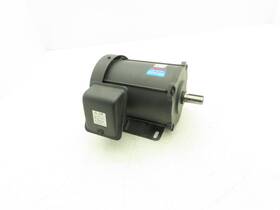
( Brand: Mitsubishi ), ( Manufacturer Part Number: MM-EFS71M ), ( Part Type: Motor )
Review MITSUBISHI Mitsubishimm Efs71m Ipm Motor .75kw 1500/1800 Rpm 176/191v 3ph Permanent Magnet
The **Mitsubishi Electric MM-EFS71M IPM (Interior Permanent Magnet) Motor** is a high-performance, energy-efficient electric motor designed to deliver exceptional reliability, precision, and operational flexibility in demanding industrial and commercial applications. Engineered with cutting-edge permanent magnet technology, this 75 kW (101 hp) motor operates seamlessly at dual-speed configurations of **1,500 RPM and 1,800 RPM**, making it ideal for variable-speed drives, HVAC systems, pumps, compressors, and conveyor systems where adaptability and efficiency are critical. The motor s **176V and 191V** three-phase voltage compatibility ensures broad application versatility, accommodating a range of power supply configurations without compromising performance. With its **IPM design**, the motor achieves superior torque density, reduced energy consumption, and enhanced thermal efficiency, all while minimizing maintenance requirements through robust internal construction and high-quality materials.
Built to Mitsubishi s rigorous engineering standards, the MM-EFS71M features a **compact yet durable frame size**, optimizing space utilization in tight installations while maintaining structural integrity under heavy loads. Its **permanent magnet rotor** eliminates the need for slip rings or brushes, reducing wear and tear and extending operational lifespan, while the advanced inverter-friendly design ensures seamless integration with variable frequency drives (VFDs), enabling precise speed and torque control for optimal process efficiency. The motor s **high-efficiency rating** translates to significant cost savings on energy bills, making it a sustainable choice for environmentally conscious industries. Additionally, its **low noise and vibration levels** contribute to a quieter operational environment, enhancing workplace comfort and reducing mechanical stress on connected equipment.
Safety and reliability are paramount in Mitsubishi s design philosophy, and the MM-EFS71M incorporates **IP54 protection rating**, shielding internal components from dust, dirt, and splashing water, while its **F-class insulation class** ensures extended operational life under continuous or intermittent duty cycles. The motor s **thermal protection features**, including built-in temperature sensors and overload safeguards, prevent overheating and equipment failure, even under peak loads. Furthermore, Mitsubishi s reputation for innovation is reflected in the motor s **smart connectivity options**, allowing for easy integration into IoT and predictive maintenance systems, enabling real-time monitoring, diagnostics, and performance optimization. Whether deployed in industrial manufacturing, renewable energy systems, or commercial infrastructure, the Mitsubishi MM-EFS71M IPM motor exemplifies a perfect blend of power, efficiency, and technological sophistication, setting a new benchmark for modern electric motor performance.
### **Pros and Cons of buying a Mitsubishi MM-EFS71M IPM Motor (75 kW, 1500/1800 RPM, 176/191V, 3-Phase, Permanent Magnet)**
#### **Pros:**1. **High Efficiency and Energy Savings**
The IPM (Interior Permanent Magnet) design ensures superior efficiency compared to traditional induction motors. This translates to lower energy consumption, reduced operational costs, and a smaller carbon footprint, making it ideal for industrial applications where power savings are critical.
2. **Compact and Lightweight**
Permanent magnet motors are generally more compact and lighter than induction motors of similar power ratings. This reduces installation complexity, lowers structural requirements, and can simplify maintenance due to fewer moving parts.
3. **Superior Dynamic Performance**
IPM motors excel in applications requiring rapid acceleration, deceleration, and precise speed control. The permanent magnets provide strong magnetic fields, improving torque response and enabling smoother operation in variable-speed drives (VSDs) or inverter-controlled systems.
4. **Low Maintenance Requirements**
With fewer windings and no slip rings or brushes (common in some motor types), IPM motors tend to have longer lifespans and require less frequent maintenance. This reduces downtime and maintenance costs over the motor s operational life.
5. **High Reliability and Durability**
Mitsubishi is a well-established manufacturer with a strong reputation for quality and reliability. The MM-EFS71M is designed for harsh industrial environments, offering robust protection against dust, moisture, and temperature fluctuations (likely IP65 or similar protection rating).
6. **Compatibility with Modern Drives**
The motor is optimized for use with variable frequency drives (VFDs), allowing for precise speed and torque control. This makes it suitable for applications like conveyors, pumps, compressors, and HVAC systems where adjustable speed is beneficial.
7. **Quiet Operation**
IPM motors typically operate more quietly than induction motors due to smoother magnetic field interactions and reduced mechanical vibrations, which can be advantageous in noise-sensitive environments.
8. **Wide Voltage Range (176/191V)**
The dual-voltage capability (176V or 191V) provides flexibility in power supply configurations, making it easier to integrate into existing electrical systems without requiring significant modifications.
9. **Standardized and Easy to Source**
Mitsubishi s motors are widely available through authorized distributors, making procurement straightforward. The MM-EFS71M is part of a well-documented product line with ample technical support and spare parts availability.
10. **Cost-Effective Long-Term Investment**
While the upfront cost may be higher than some induction motors, the energy savings, efficiency gains, and reduced maintenance costs often justify the investment over time, especially in high-usage industrial settings.
---
#### **Cons:**1. **Higher Initial Cost**
IPM motors are generally more expensive upfront than standard induction motors of comparable power. The cost of permanent magnets, advanced manufacturing processes, and higher efficiency components contributes to this premium.
2. **Sensitivity to Overheating**
Permanent magnets can degrade if exposed to excessive heat over prolonged periods. While Mitsubishi s design includes protections against this, improper installation (e.g., inadequate cooling or overloading) could reduce the motor s lifespan.
3. **Limited Repair Options**
Unlike induction motors, which can often be rewound or repaired, IPM motors may require replacement if the permanent magnets or stator windings fail. This can increase long-term repair costs and reduce the motor s recyclability.
4. **Compatibility with Legacy Systems**
If the application relies on older control systems or drives not optimized for IPM motors, additional hardware or software upgrades may be necessary. This could add complexity and cost to integration.
5. **Potential for Higher Inrush Current**
While generally efficient at steady-state operation, IPM motors may draw higher inrush currents during startup, which could stress electrical infrastructure or require additional protection measures (e.g., soft starters or current limiters).
6. **Dependence on Supply Voltage Stability**
IPM motors are sensitive to voltage fluctuations. Significant deviations from the rated voltage (176V/191V) can negatively impact performance, efficiency, or motor lifespan. A stable power supply or voltage regulation may be necessary.
7. **Limited Availability of Aftermarket Parts**
While Mitsubishi parts are reliable, finding third-party replacements for specific components (e.g., bearings, seals, or magnets) may be challenging compared to more common motor types.
8. **Potential for Higher Noise at Low Speeds**
While generally quieter than induction motors, some IPM designs may produce more audible noise at very low speeds due to magnetic field interactions. This could be a consideration for applications with strict noise requirements.
9. **Environmental Considerations**
Permanent magnets often contain rare-earth elements like neodymium or samarium-cobalt, which have environmental and ethical sourcing concerns. While Mitsubishi likely adheres to responsible sourcing practices, this remains a consideration for environmentally conscious buyers.
10. **Learning Curve for Installation/Integration**
The advanced features of IPM motors (e.g., vector control, field-oriented control) may require additional training for technicians or engineers unfamiliar with these technologies, potentially increasing setup time or costs.
---
### **Ending Conclusion:**The **Mitsubishi MM-EFS71M IPM motor (75 kW, 1500/1800 RPM)** is a high-performance, energy-efficient alternative to traditional induction motors, particularly well-suited for applications demanding precision, speed control, and reliability. Its compact design, superior dynamic response, and compatibility with modern drives make it an excellent choice for industries such as manufacturing, HVAC, pumps, and material handling. However, the higher upfront cost, sensitivity to operational conditions, and potential maintenance challenges must be carefully weighed against the long-term benefits.
For buyers prioritizing **energy savings, space efficiency, and advanced control**, this motor is a strong recommendation. Conversely, if **budget constraints, simplicity, or legacy system compatibility** are critical factors, a traditional induction motor may be more appropriate. Conducting a **detailed cost-benefit analysis**, including operational energy savings and maintenance expenses over the motor s lifespan, will help determine whether the investment in the MM-EFS71M is justified for your specific application.
### **Recommendation:** **Buy the Mitsubishi MM-EFS71M IPM motor if:**- Your application requires **variable-speed operation, high efficiency, or rapid acceleration/deceleration**.
- You operate in an environment where **energy costs are significant**, and long-term savings justify the higher initial investment.
- Your electrical infrastructure supports **VFD integration** and stable voltage supply.
- You value **low maintenance and reliability** in a demanding industrial setting.
**Avoid or reconsider if:**- Your budget is **strictly limited**, and the upfront cost cannot be offset by energy savings.
- Your system lacks **modern control capabilities** (e.g., VFDs) or has **unstable power supply**.
- You prioritize **ease of repair or replacement** over advanced performance.
- The application does not benefit from **adjustable speed or high dynamic performance**.
For most **high-efficiency industrial applications**, the Mitsubishi MM-EFS71M is a **strong, well-supported choice** that delivers superior performance over its operational lifespan. Pair it with a compatible VFD and proper installation practices to maximize its advantages.
Details:
And the cost of return shipping. RPM: 1500/1800. Condition Used. Part Number MM-EFS71M.
Items in Lot1. Country of Manufacture Japan. In Good Working Condition, Removed from a Environment. Model MM-EFS71M.
Ask our experts.
part #: mmefs71m price
- $449.99
specifications oelemot:
- brand: Mitsubishi
- mpn: Mm-efs71m
- part type: Motor
shipping oelemot:
- cost: $62.08
- class: Standard, Expedited, One-day
- type: Calculated
- transit: 2-4 Days
- service: FedEx Ground / FedEx Home Delivery, FedEx 2Day, FedEx Standard Overnight
- carrier: FedEx
seller oelemot:
- rating: 99.9%
- city: Millersburg, Indiana
- # reviews: 17392
payments oelemot:
- other
- wallet: Google-pay
- credit card: Discover
returns oelemot:
- policy: Returns Accepted
- paid by: Buyer
- time: 30 Days
- method: Money back
offer oelemot:
- started: February 10, 2026
- sold: 0
- best offers: True
- quantity: 1
- availability: In Stock
- options: Ship-to-home
general oelemot:
- condition: Used
- Industrial Automation Motion Controls > Electric Motors > General Purpose Motors
Mitsubishi MM-EFS71M Is Similar To:
- Gm-h2b Mitsubishi Electric Geared Speed Controller Motor (29.4% similar) Mitsubishi electric GM-H2B. On a scale from, with 10 being in new or excellent condition, this item is rated as an USPS or ups ground. Cash is only accepted for will-calls in-person length in inches: 16. Standard shipping prices are only good for the lower 48 states. All parts, accessories, cables...(July 8th, 2018)
- Ha100nbs-a33 Mitsubishi Electric Servo Motor (30.6% similar) ...(August 14th, 2017)
- Ha300ncbs Mitsubishi Motor Osa104 Straight (32.8% similar) On Jan at 10:59:40 PST...(June 6th, 2017)
- Hc-h52t-a42 Mitsubishi Servo Motor New (33.9% similar) Friendly, knowledgeable techs that answer your calls and take time to help you. Est is processed. Equipment emergency. Call us at for help. Registered ISO 9001:2008 company specializing in the repair of servo motors and industrial electronics. WARRANTY:1 year warranty Mitsubishi servo motor. Ship us...(May 13th, 2017)
- Hc-mf73b Mitsubishi Motor (30.5% similar) Good cosmetic condition, used, Mitsubishi HC-MF73B motor, working buyer pays. R3-B216 APR18...(April 21st, 2018)
- Hc-pq43k-ue Mitsubishi Ac Servo Motor Used Qty (34.9% similar) 8 rpm: 3000SHAFT dimensions: 14MM DOA. From working environment and presumed. X 25MM long approximate with key-way groove and key. 8a 400W 3000RPM - used volts : 122AMPS: used in fair condition with signs of use. Ideal for machine builders and experimenters. Missing rear wire clamp section see ...(July 23rd, 2018)
- Hc703bs Mitsubishi Servo Motor Encoder Unknown (36.5% similar) Boxing handling processing plus shipping costs from zip 49534. Boxing handling plus shipping costs from zip 49534. This is both FedEx and ups rules. Once we get the return, will inspect item to make sure it is in same condition as shipped. Alternations or removal of any components a part voids the ...(February 16th, 2017)
- Hc703s Mitsubishi Servo Motor Encoder Ose105s2 (36.5% similar) Once we get the return, will inspect item to make sure it is in same condition as shipped. Boxing handling processing plus shipping costs from zip 49534. Boxing handling plus shipping costs from zip 49534. DIMENSIONS:15'' x 10'' 7'' condition: 3 fair thread is damaged slightly at the top of ...(February 16th, 2017)
- Hf-sp352 Mitsubishi Ac Servo Motor Kw (34.2% similar) To 48 continental states only. Actual item on pictures. 5 kw 2000 rpm shaft diameter 35MM weight 40 lbs 19KG made in japan shipping most items over 13 ounces will go USPS priority mail expedited. Box, APOS, fops, or military mail box. Dust dings and scratches as seen on pictures. Mitsubishi HF-...(October 24th, 2018)
- Hf-sp352k Mitsubishi Servo Motor (32.1% similar) Brand new in box...(March 24th, 2018)
- Hf354bs-a51 Mitsubishi Servo Motor (31.6% similar) ...(December 27th, 2016)