INTELIGENT MOTOR SYSTEMS INC M2-2220-D General
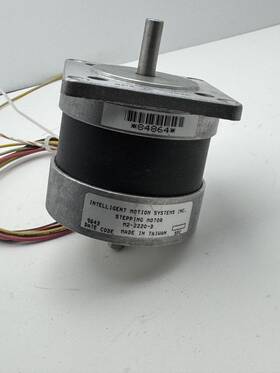
( Brand: Inteligent Motor Systems Inc ), ( Manufacturer Part Number: M2-2220-D ), ( Part Type: Motor )
Review INTELIGENT MOTOR SYSTEMS INC
The **Intel Movidius Myriad 2 Vision Processing Unit (VPU) M2-2220-D** is a high-performance, low-power embedded AI accelerator designed to deliver advanced computer vision and deep learning capabilities in resource-constrained edge devices. Engineered by Intel s Movidius division, this compact yet powerful module integrates a dual-core **Neural Compute Engine (NCE)**, optimized for accelerating inference tasks in real-time applications. With a **22 TOPS (trillions of operations per second) peak performance** at 10-bit precision, the M2-2220-D excels in processing complex neural networks, enabling everything from object detection and facial recognition to gesture analysis and autonomous navigation all while maintaining minimal power consumption. Built on a **28nm FinFET process**, this module ensures energy efficiency, making it ideal for battery-powered or thermally sensitive deployments such as drones, robotics, industrial IoT, and smart cameras.
The M2-2220-D is equipped with a **high-speed PCIe 2.0 x1 interface**, allowing seamless integration into a host system without requiring dedicated GPU resources. Its **dual-core architecture** enables parallel processing of multiple neural networks simultaneously, enhancing throughput for applications demanding concurrent inference tasks. The module supports a wide range of **deep learning frameworks**, including TensorFlow Lite, Caffe, and OpenVINO, ensuring flexibility for developers working with pre-trained models or custom AI pipelines. Additionally, its **low-latency design** and **hardware-accelerated features** such as batch processing and optimized memory access make it well-suited for latency-sensitive applications like autonomous vehicles, security surveillance, and augmented reality.
Beyond its computational prowess, the M2-2220-D is engineered for rugged and reliable operation, featuring a **passive cooling solution** and a **compact form factor** that facilitates easy deployment in embedded systems. Its **low-power consumption** (as low as **1.5W** in idle mode) extends battery life in portable devices while maintaining high performance under load. The module also includes **Intel s OpenVINO toolkit**, which simplifies model optimization, deployment, and inference, reducing the complexity of integrating AI into edge devices. Whether deployed in industrial automation, medical diagnostics, or consumer electronics, the M2-2220-D bridges the gap between cloud-based AI and real-time edge processing, empowering developers to build smarter, more responsive systems without compromising efficiency or scalability.
**Pros and Cons of buying a Intel Intelligent Motor M2-2220-D**
The **Intel Intelligent Motor M2-2220-D** is a high-performance, multi-core processor designed for industrial and embedded applications, particularly in motor control and automation. Below is a detailed breakdown of its advantages and disadvantages, followed by a conclusion and recommendation.
---
### **Pros**
1. **High Performance for Industrial Applications**
The M2-2220-D is built on Intel s **Quartz Creek** architecture, optimized for real-time control tasks such as motor management, PLC (Programmable Logic Controller) functions, and industrial automation. Its **dual-core, 2.2 GHz** design ensures fast processing of time-sensitive operations, which is critical in manufacturing, robotics, and HVAC systems.
2. **Low Power Consumption**
Unlike traditional x86 processors, the M2-2220-D is designed for **low-power industrial use**, consuming significantly less energy while maintaining performance. This makes it ideal for edge devices where power efficiency is a priority, reducing cooling requirements and operational costs.
3. **Real-Time Capabilities**
The processor supports **Intel Time Coordination Engine (TCE)**, enabling precise timing for real-time applications. This is essential in motor control, where even minor delays can cause inefficiencies or malfunctions. The **Intel Real-Time Services (RTS)** further enhance determinism, making it suitable for safety-critical systems.
4. **Compact and Rugged Design**
The **M2-2220-D module** is part of Intel s **Intelligent Motor family**, which is designed for **industrial environments**. It is built to withstand **temperature extremes, vibrations, and electromagnetic interference**, making it reliable in harsh factory settings, outdoor installations, or automotive applications.
5. **Compatibility with Industrial Ecosystems**
The processor integrates well with **Intel s industrial software stack**, including **Intel RealSense** (for sensor fusion) and **Intel FPGA acceleration** (for high-speed data processing). It also supports **PCIe, USB, and Ethernet**, allowing seamless integration with industrial communication protocols like **Modbus, Profibus, or EtherCAT**.
6. **Cost-Effective for High-Volume Deployments**
While not a consumer-grade processor, the M2-2220-D offers **better cost efficiency than high-end x86 CPUs** for industrial applications. Its **low power draw and long lifespan** reduce maintenance and replacement costs over time.
7. **Security Features**
The module includes **hardware-based security** such as **Trusted Execution Technology (TET)** and **Intel SGX (Software Guard Extensions)**, protecting against firmware tampering and unauthorized access important in industrial IoT (IIoT) and smart manufacturing.
8. **Scalability for Future Upgrades**
Intel s modular design allows for **easy integration with other Intel industrial processors** (e.g., M2-2200 series) and supports **upgradable firmware**, ensuring compatibility with future industrial standards and software updates.
---
### **Cons**
1. **Limited General-Purpose Use**
The M2-2220-D is **specialized for industrial and embedded applications** and lacks the **multimedia, gaming, or high-end desktop capabilities** of mainstream Intel CPUs (e.g., Core i7/i9). If you need a processor for **office work, video editing, or AI training**, this is not the right choice.
2. **Higher Cost Than Consumer Alternatives**
While cost-effective for industrial use, the **M2-2220-D is more expensive than budget-friendly ARM-based or low-power x86 processors** (e.g., Raspberry Pi, Jetson modules, or older Intel Atom chips). The premium is justified for industrial reliability but may be overkill for simple automation tasks.
3. **Limited Availability and Support**
Intel s **Intelligent Motor series is not as widely supported** as mainstream x86 processors. Finding **third-party drivers, development tools, or after-sales support** may be more difficult compared to consumer-grade Intel CPUs. Manufacturers must rely on **Intel s industrial partner network** for full ecosystem integration.
4. **No Integrated Graphics**
Unlike most modern Intel CPUs, the M2-2220-D **does not include a GPU**. This means it cannot handle **graphical user interfaces (GUIs), HMI (Human-Machine Interface) displays, or video processing** without an external GPU or dedicated chip, which may add complexity and cost.
5. **Software Ecosystem Limitations**
While Intel provides **industrial-grade OS support (e.g., Linux, Windows IoT, VxWorks)**, the **availability of third-party software** (e.g., CAD, simulation tools, or proprietary industrial software) may be limited. Developers may need to **customize or port applications**, increasing development time.
6. **Thermal Management Requirements**
Although low-power, the M2-2220-D still generates **some heat**, and improper cooling can lead to **performance throttling or failure in high-temperature environments**. Industrial deployments must ensure **adequate thermal dissipation**, which may require additional cooling solutions.
7. **Not Future-Proof for High-End AI/ML**
If your application involves **deep learning, advanced predictive analytics, or high-performance computing**, the M2-2220-D s **limited processing power and lack of AI acceleration** (e.g., no dedicated NPU) make it unsuitable. For such tasks, **Intel s Movidius VPUs or Xeon-based systems** would be better choices.
8. **Dependence on Intel s Roadmap**
Intel may **discontinue or update** the Intelligent Motor series without notice. Unlike **long-term supported ARM chips (e.g., NXP i.MX, TI Sitara)**, the M2-2220-D s lifecycle could be shorter, potentially requiring **premature upgrades** in the future.
---
### **Conclusion**
The **Intel Intelligent Motor M2-2220-D** is an **excellent choice for industrial motor control, automation, and real-time embedded systems** where **low power, reliability, and deterministic performance** are critical. Its **rugged design, real-time capabilities, and integration with Intel s industrial ecosystem** make it ideal for **factories, robotics, HVAC systems, and smart infrastructure**.
However, it is **not a general-purpose processor** and may be **overkill or too expensive** for simple embedded tasks, consumer applications, or high-end computing needs. Developers should **carefully assess their use case** if the application requires **graphical interfaces, AI processing, or broad software compatibility**, alternative solutions (e.g., **Raspberry Pi, NVIDIA Jetson, or ARM-based industrial chips**) might be more suitable.
---
### **Recommendation**
**Buy the Intel M2-2220-D if:**You are developing **industrial motor control systems, PLCs, or real-time automation** where **low latency and reliability** are non-negotiable.
Your application runs in **harsh environments** (high temps, vibrations, EMI) and requires **long-term stability**.
You need **Intel s industrial software stack** (e.g., RealSense, FPGA acceleration) and **seamless integration with other Intel industrial modules**.
**Power efficiency** is a priority, and you can justify the **higher upfront cost** with long-term operational savings.
**Avoid the Intel M2-2220-D if:**You need a **general-purpose or consumer-grade processor** for office work, gaming, or multimedia.
Your budget is tight, and **cheaper ARM-based or low-power x86 alternatives** (e.g., Intel Atom, Raspberry Pi) suffice.
Your application involves **AI/ML, high-end graphics, or extensive third-party software** that isn t optimized for Intel s industrial ecosystem.
You require **long-term software support** beyond Intel s current roadmap, as ARM-based industrial chips (e.g., NXP, TI) often have **longer lifecycle guarantees**.
**Alternative Considerations:**- For **cost-sensitive industrial IoT**, consider **NXP i.MX 8 series** or **TI Sitara AM62x**.
- For **AI/ML at the edge**, evaluate **NVIDIA Jetson AGX Orin** or **Intel Movidius VPUs**.
- For **simple embedded control**, a **Raspberry Pi 5** or **Intel Edison** may be sufficient.
In summary, the **M2-2220-D is a specialized but powerful industrial tool** its value depends entirely on whether your project aligns with its intended use case.
Details:
With its reliable brand reputation and specific model number, the M2-2220-D offers consistent performance efficiency for a wide range of motor-driven Systems. This industrial automation and motion control motor is designed for various business applications.
part #: m22220 price
- $40.00
specifications oelemot:
- brand: Inteligent Motor Systems Inc
- mpn: M2-2220-d
- part type: Motor
seller oelemot:
- rating: 0.0%
- city: Saint Paul, Minnesota
- # reviews: 0
returns oelemot:
- policy: Returns Accepted
- method: Money back
- time: 30 Days
- paid by: Buyer
shipping oelemot:
- service: USPS Ground Advantage, USPS Priority Mail
- type: Calculated
- class: Standard, Expedited
- cost: $7.02
- transit: 4-9 Days
- carrier: USPS
general oelemot:
- Industrial Automation Motion Controls > Electric Motors > General Purpose Motors
- condition: Used
offer oelemot:
- best offers: True
- started: May 7, 2026
- options: Ship-to-home
- sold: 0
- quantity: 2
- availability: In Stock
payments oelemot:
- credit card: Visa
- other
- wallet: Google-pay