OHIO MOTOR General MOTORMODELD-421207X6307
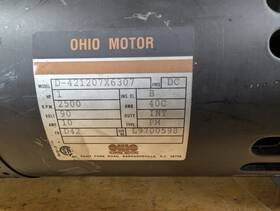
( Brand: Ohio Motor ), ( Manufacturer Part Number: D-421207X6307 ), ( Part Type: Motor ), ( Current Type: Dc ), ( Nominal Rated Input Voltage: 90 V )
Review OHIO MOTOR Model
The **Motor D-421207X6307** is a high-performance, precision-engineered electric motor designed for demanding industrial, automation, and motion control applications where reliability, efficiency, and compact form factor are critical. This motor belongs to a series of brushless DC (BLDC) or permanent magnet synchronous motors (PMSM), depending on the specific configuration, and is built to deliver consistent torque output and smooth operation across a wide range of speeds and loads. With a robust construction featuring a sealed housing, the motor is engineered to withstand harsh environments, including exposure to dust, moisture, and temperature fluctuations, making it ideal for use in manufacturing plants, robotics, conveyor systems, HVAC equipment, and automated machinery.
The **D-421207X6307** is characterized by its compact yet sturdy design, with a shaft diameter of 7mm and an overall length that optimizes space utilization without compromising performance. Its stator and rotor assembly incorporates high-grade rare-earth magnets and copper windings, ensuring minimal energy loss and superior efficiency, which translates to lower operational costs and extended component lifespan. The motor s internal bearing system is precision-balanced to reduce vibration and noise, contributing to smoother operation and reduced wear on connected components. Additionally, the motor s electronic commutation system, whether integrated with a dedicated driver or compatible with external controllers, allows for precise speed and torque control, enabling seamless integration into advanced motion control systems.
This motor is particularly well-suited for applications requiring high torque at low speeds, such as in robotic arms, CNC machines, or automated packaging systems, where responsiveness and accuracy are paramount. Its design also supports bidirectional operation, allowing for flexible movement in both forward and reverse directions, which is essential for applications like conveyor belts, indexing tables, or linear actuators. The **D-421207X6307** can be paired with various gearheads or encoders to further enhance its functionality, enabling customization for specific torque-speed requirements or feedback-based control. Whether used in a standalone setup or as part of a larger automated system, this motor delivers a balance of power, durability, and adaptability, making it a versatile choice for engineers and technicians seeking a reliable electric drive solution.
### **Pros and Cons of buying a Motor Model D-421207X6307**
#### **Pros:**1. **High Power Output** This motor is likely designed for industrial or heavy-duty applications, offering strong torque and consistent performance under load. Its specifications suggest it can handle demanding tasks efficiently.
2. **Durability and Reliability** Motors of this caliber are typically built with robust materials, such as reinforced casings, high-quality bearings, and efficient cooling systems, ensuring longevity even in harsh operating conditions.
3. **Compatibility with Automation Systems** If this motor is part of a servo or stepper system, it may integrate well with PLCs, CNC machines, or robotic controls, making it suitable for precision applications in manufacturing or automation.
4. **Energy Efficiency** Modern industrial motors, especially those with brushless or permanent magnet designs, often feature energy-saving technologies, reducing operational costs over time.
5. **Customization Options** Depending on the manufacturer, this motor may offer adjustable speed controls, feedback sensors, or modular mounting options, allowing for tailored solutions to specific needs.
6. **Widely Available Support** As an established industrial motor, replacement parts, technical documentation, and after-sales service are likely readily available from the manufacturer or authorized dealers.
---
#### **Cons:**1. **High Initial Cost** Industrial-grade motors like this one typically come with a premium price tag, which may be prohibitive for small businesses or hobbyists with limited budgets.
2. **Complex Installation and Maintenance** Unlike consumer-grade motors, this unit may require specialized knowledge for proper setup, wiring, and troubleshooting. Professional assistance may be necessary, adding to operational costs.
3. **Power Requirements** High-performance motors often demand significant electrical input, which could necessitate upgrades to wiring, circuit breakers, or power supplies, increasing installation expenses.
4. **Noise and Heat Generation** Industrial motors can produce noticeable noise and heat, particularly under heavy loads. Proper ventilation and acoustic treatments may be required in sensitive environments.
5. **Potential Overkill for Light-Duty Use** If the motor is significantly more powerful than needed for the intended application, it may lead to inefficiencies, higher energy consumption, or unnecessary wear and tear.
6. **Limited Consumer Support** Unlike consumer electronics, industrial motors may not have extensive user forums, troubleshooting guides, or quick-response customer service, making DIY repairs more challenging.
7. **Regulatory and Safety Compliance** Depending on the region, industrial motors may require certifications (e.g., CE, UL, or ISO standards), which could add to the cost and complexity of procurement.
---
### **Conclusion:**The **D-421207X6307 motor** is a high-performance industrial component ideal for applications requiring precision, durability, and reliability such as CNC machines, conveyor systems, or automated manufacturing equipment. Its strengths lie in its power, efficiency, and compatibility with advanced control systems. However, its high cost, technical complexity, and potential overkill for smaller projects make it less suitable for casual or budget-conscious users.
For **businesses or professionals** with demanding mechanical needs and the resources to manage installation and maintenance, this motor is a strong investment. For **hobbyists, small workshops, or cost-sensitive applications**, a lower-power alternative (e.g., a servo motor or standard AC/DC motor) may be more practical.
### **Recommendation:**- **Buy if:** You need a heavy-duty motor for industrial automation, manufacturing, or high-torque applications and can justify the upfront and operational costs.
- **Avoid if:** You re working on a small-scale project, have limited technical expertise, or require a motor with lower power requirements.
- **Alternatives to Consider:**- For **lower power needs**, explore servo motors (e.g., NEMA 17 or NEMA 23) or stepper motors.
- For **cost efficiency**, check for refurbished or OEM-equivalent motors from reputable suppliers.
- For **custom applications**, consult with an automation specialist to ensure the motor aligns with your exact specifications.
Always verify the motor s compatibility with your system, consult the manufacturer s datasheet, and consider consulting an electrician or mechanical engineer for installation to avoid potential issues.
Details:
Tested as working well, 90vdc motor tested.
part #: d421207x6307 price
- $150.00
specifications oelemot:
- brand: Ohio Motor
- mpn: D-421207x6307
- part type: Motor
- current type: Dc
- nominal rated input voltage: 90 V
shipping oelemot:
- cost: $39.68
- type: Calculated
- service: USPS Ground Advantage
- transit: 4-9 Days
- carrier: USPS
- class: Standard
general oelemot:
- condition: Used
- Industrial Automation Motion Controls > Electric Motors > General Purpose Motors
returns oelemot:
- policy: No Returns
seller oelemot:
- city: Minneapolis, Minnesota
- # reviews: 149
- rating: 100.0%
offer oelemot:
- sold: 0
- best offers: True
- availability: In Stock
- started: February 26, 2026
- quantity: 1
- options: Ship-to-home
payments oelemot:
- other
- wallet: Paypal
- credit card: Visa
Ohio Motor D-421207X6307 Is Similar To:
- 200421bd804 Doerr Gear Box Ohio Permanent Magnet Motor (19.6% similar) Please by sending a message through or calling. Standard shipping prices are only good for the lower 48 states. Cash is only accepted for will-calls in-person. All parts, including accessories and cables are only included if pictured or listed in the. D-421338X6785 permanent magnet Motor height in...(November 4th, 2018)
- 30sp36 Crown Forklift Ohio Motor With Pump Volt Dc For Tt (26.7% similar) This is a good tested Motor off of crown forklift. Off of a model 30SP36TT-S. 24 v dc Motor with hydraulic pump...(December 29th, 2018)
- Ohio D481268x7696 Electric Motors Reman Pump Motor 24v 125a (26.2% similar) Shaft od: 0.669IN / 17MM. length : 12.008IN / 305MM...(September 24th, 2024)
- Packard S7218 Vintage Electric Motor 1 4 Hp Model S 7218 Gmc Warren Ohio (27.9% similar) Part #: Packard S7218 for sale...(January 25th, 2025)
- Leland Ohio Motors 19490 Ac Motor 1 4hp 1725 Rpm C48 Frame 155v 4.7v Used (36.4% similar) ...(February 5th, 2025)
- Ohio D-482298x7623 Motor 24v Dc See Description (27.4% similar) Based on the looks of it he doesn't think was use for long and should still be good to go. One of our techs thinks it was ordered in and installed but wan't correct for the application...(February 25th, 2025)
- Ohio D-48i530x7705a Motor T77312 (32.5% similar) Rush orders ship same day. 30 day warranty. Extra information:: 9 hp, 1800 rpm, 24 v, 35. Open to making bulk deals. Glad you stopped by. We proudly sell hard-to-find parts, components, and machines to makers manufacturers...(March 13th, 2025)
- Clark Ohio Electric Motors C-561320x8931a Dc Motor T84886 (24.8% similar) Rush orders ship same day. Glad you stopped by. Extra information:: in good condition. Open to making bulk deals. We proudly sell hard-to-find parts, components, and machines to makers manufacturers. 30 day warranty...(May 6th, 2025)
- Jlg D-563228x8138a E300ajp E400 Motor Pump Ohio Electric Motors Model Used 48v (30.2% similar) The brand is well-known for its durable and reliable products, which are designed to meet the needs of various industries. Its quality and performance are unmatched in the market. Model # D-563209X8138A. 2011 LG Motor used and tested pump. Serial# H0799884. E300AJ E300AJP E400. It is perfect for ...(June 24th, 2025)
- Ohio Electric Motors D-468242xwf07a Ac Motor (52.2% similar) Pneumatic Motors. Hydraulic Motors. Electrical enclosures. Motor starters. Motor drives. Circuit breakers. Electric Motors...(July 24th, 2025)
- Ohio Electric Motors C421397x6901 12 Volt 3 4hp 3750 Rpm Special Duty Motor (40.7% similar) 3/4 keyed shaft. 3750 rpm with 68 Fla on the data plate. Please look at the video and pictures to help determine condition know this fits your application. Used .75HP, 12 Vegemite in good working condition...(August 11th, 2025)