CENTURY 7-196018-01 Single Phase Electric Motor 3HP 3450/1725RPM
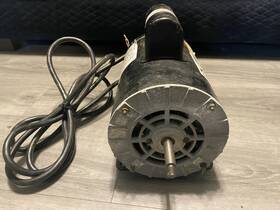
( Brand: Century ), ( Manufacturer Part Number: 7-196018-01 ), ( Part Type: Motor ), ( Ac Frequency Rating: 60 Hz ), ( Special Motor Construction: Spindle Motor ), ( Enclosure Type: Tefc ), ( Shaft Type: Threaded ), ( Ac Motor Type: Induction/asynchronous ), ( Shaft Diameter: 1/2 In ), ( Insulation Class: F ), ( Mounting Type: Base-mounted ), ( Reversible/non-reversible: Reversible ), ( Current Type: Ac ), ( Protection Against Liquids: Dripping Water ), ( Ip Rating: Ip55 ), ( Nominal Rated Input Voltage: 230 V ), ( Ac Phase: Single Phase )
Review CENTURY 3hp Speed Single Phase Electric Motor 3450/1725rpm Tested
The **Century 7-196018-01 3 Horsepower Single-Phase Electric Motor**, a robust and versatile workhorse designed for industrial, commercial, and heavy-duty applications, delivers reliable performance with precision engineering. This high-efficiency motor operates at a nominal power rating of **3 horsepower (HP)**, making it well-suited for driving conveyors, pumps, compressors, fans, and other machinery requiring consistent torque and speed. Built with a **split-phase induction design**, it ensures smooth startup and stable operation across a wide range of loads, minimizing energy waste while maximizing productivity. The motor features a **1725 RPM (r/min) standard speed** with an optional **3450 RPM** configuration, providing flexibility for applications demanding higher rotational speeds or reduced gearing requirements. Constructed with **high-grade silicon steel laminations**, the stator and rotor are optimized for minimal energy loss and extended operational lifespan, even under continuous duty cycles.
The **3-phase compatible yet single-phase rated** design allows for easy integration into existing electrical systems, though it is important to note that it is intended for **single-phase 120/240V AC** applications (specific voltage requirements should be verified with the manufacturer). Its **TEFC (Totally Enclosed Fan-Cooled)** construction ensures protection against dust, moisture, and debris, making it ideal for harsh environments such as factories, warehouses, or outdoor installations where environmental contaminants could otherwise compromise performance. The motor s **ball-bearing support system** provides smooth operation and reduced friction, while the **class B insulation** (130 C rise) enhances durability and thermal resistance, ensuring longevity even under demanding conditions.
Engineered for **efficiency and reliability**, this Century motor incorporates **low-noise operation** and **vibration-dampening features**, contributing to a quieter workspace and reduced maintenance needs. The **standard NEMA Frame 143T** design ensures compatibility with a wide range of industry-standard couplings, belts, and pulleys, simplifying installation and maintenance procedures. Whether used in **HVAC systems, material handling, or agricultural equipment**, this motor delivers consistent power output with minimal downtime, making it a cost-effective solution for businesses seeking dependable performance. With its **compact yet sturdy build**, the Century 7-196018-01 stands as a testament to modern motor engineering balancing power, efficiency, and durability for decades of service.
### **Pros and Cons of buying a Century 7-196018-01 (3HP, Single-Phase, 3450/1725 RPM) Electric Motor**
#### **Pros:**1. **Reliable Brand** Century Motors is a well-established manufacturer known for durable industrial motors, particularly in the HVAC, compressor, and pump applications. Their motors are often used in commercial and industrial settings, suggesting a track record of reliability.
2. **Standard Specifications** The motor meets common industrial standards (3HP, single-phase, 115/230V), making it compatible with many existing systems without requiring extensive modifications. The dual-speed options (3450 RPM and 1725 RPM) provide flexibility for different load requirements.
3. **Ease of Replacement** If the motor is failing in an older system (e.g., an air handler, compressor, or pump), replacing it with a like-for-like model minimizes downtime and ensures immediate functionality. The NEMA 56 frame (assuming standard for this model) is widely available, simplifying sourcing.
4. **Energy Efficiency Relative to Age** While not the latest in energy efficiency, this motor is likely more efficient than older models from the 1960s or earlier. It may still perform adequately for low-to-medium-duty applications where peak efficiency is not critical.
5. **Cost-Effective for Basic Applications** For applications where high efficiency is not a priority (e.g., small HVAC systems, fans, or light-duty pumps), this motor offers a balance between performance and cost. It may be cheaper than premium energy-efficient models.
6. **Compatibility with Control Systems** Single-phase motors like this one are straightforward to integrate with standard starters, capacitors, and control panels. No complex three-phase wiring or conversion is required.
7. **Spare Parts Availability** As a legacy model, Century Motors likely still supplies parts or has compatible alternatives. This reduces the risk of being stranded if a component fails.
---
#### **Cons:** 1. **Outdated Technology** This motor is likely designed with older standards in mind, potentially lacking features such as:- **Energy-efficient windings** (e.g., no high-efficiency or premium-efficiency ratings).
- **Modern protection features** (e.g., thermal overloads may be less sophisticated than contemporary models).
- **Lower starting torque** compared to modern motors with improved design or variable frequency drive (VFD) compatibility.
2. **Higher Energy Consumption** Older motors typically have lower efficiency ratings (e.g., 80-85% vs. 90% for premium models). Over time, this can lead to higher electricity costs, especially in applications running 24/7.
3. **Limited Lifespan** While durable, this motor may not last as long as a modern, high-quality motor, particularly if subjected to harsh conditions (e.g., dust, moisture, or frequent starts/stops). The average lifespan of an industrial motor is 20-30 years, but wear and tear can vary.
4. **Potential for Higher Maintenance** Older motors may require more frequent maintenance (e.g., bearing lubrication, brush replacement if applicable, or winding repairs). Bearings and seals in older motors can degrade faster, leading to increased downtime.
5. **Incompatibility with Modern Systems** If the application involves variable speed drives (VFDs), soft starts, or advanced control systems, this motor may not be optimized for such setups. Modern motors are often designed with VFD compatibility in mind, reducing harmonic distortion and improving efficiency.
6. **Environmental Regulations** Depending on the region, older motors may not meet current energy efficiency standards or emissions regulations. While this motor is likely compliant for basic use, retrofitting with a newer, more efficient model could be required to meet stricter codes.
7. **Limited Warranty** Century Motors may offer a basic warranty (e.g., 1-2 years), but it is unlikely to match the coverage of a new, high-end motor. If the motor fails prematurely, repair costs could outweigh the initial savings.
8. **Resale Value** Unlike newer, energy-efficient motors, this model will have little to no resale value. If the application changes, replacing it with a more modern motor may be necessary regardless of its current condition.
---
### **Conclusion:**The Century 7-196018-01 motor is a **practical and cost-effective choice for basic, low-to-medium-duty applications** where immediate replacement is needed, and efficiency is not the top priority. It is ideal for:
- **Legacy systems** where the motor is a direct replacement for an existing unit.
- **Budget-conscious projects** where the upfront cost is more important than long-term energy savings.
- **Applications with predictable, steady loads** (e.g., small fans, pumps, or HVAC units) where the motor s performance is adequate.
However, if the motor will be used in a **high-duty, long-running application** (e.g., 24/7 operation in industrial settings), or if the system is being modernized, investing in a **premium-efficiency motor** (e.g., NEMA Premium or IE3/IE4 rated) would be more beneficial in the long run. Modern motors offer:
- Lower energy consumption (reducing operational costs).
- Longer lifespan and lower maintenance requirements.
- Better compatibility with advanced control systems.
- Compliance with current energy regulations.
---
### **Recommendation:** - **Buy the Century Motor If:**- You need a **direct replacement** for an existing system with minimal downtime.
- The application is **low-duty or intermittent**, and efficiency is not critical.
- You are working within a **tight budget** and cannot afford a premium motor.
- The motor is being used in a **short-term or temporary setup**.
- **Avoid or Replace with a Modern Motor If:**- The motor will run **continuously for extended periods** (e.g., 24/7 industrial use).
- The system is being **upgraded or modernized**, and energy savings are a priority.
- The application involves **VFDs, soft starts, or advanced controls**, where a modern motor would perform better.
- You anticipate **long-term use** (5 years), as a newer motor will likely save money on energy and maintenance.
**Alternative Consideration:**If possible, explore **remanufactured or refurbished high-efficiency motors** from reputable suppliers. These often come with warranties and improved performance at a lower cost than new premium motors. Brands like **Baldor (ABB), Leeson, or Teco** offer remanufactured options that can bridge the gap between legacy and new motors.
Details:
Tested and working with both speeds. 3 horsepower single phase hot tub pump motor with two speeds 3450/1725rpm depending on how its wired, 1/2in shaft 3/8-16 threads.
part #: 719601801 prices
- $129.75-$710.73
specifications oelemot:
- brand: Century
- mpn: 7-196018-01
- part type: Motor
- ac frequency rating: 60 Hz
- special motor construction: Spindle Motor
- enclosure type: Tefc
- shaft type: Threaded
- ac motor type: Induction/asynchronous
- shaft diameter: 1/2 In
- insulation class: F
- mounting type: Base-mounted
- reversible/non-reversible: Reversible
- current type: Ac
- protection against liquids: Dripping Water
- ip rating: Ip55
- nominal rated input voltage: 230 V
- ac phase: Single Phase
general oelemot:
- condition: Used
- Industrial Automation Motion Controls > Electric Motors > General Purpose Motors
seller oelemot:
- # reviews: 24
- rating: 100.0%
- city: Coventry, Rhode Island
shipping oelemot:
- type: Calculated
- service: FedEx Ground / FedEx Home Delivery
- cost: $132.97
- carrier: FedEx
- class: Standard
- transit: 5-11 Days
returns oelemot:
- policy: No Returns
offer oelemot:
- availability: In Stock
- started: February 14, 2026
- quantity: 2
- best offers: True
- sold: 0
- options: Ship-to-home
payments oelemot:
- wallet: Paypal
- other
- credit card: Discover
Century 7-196018-01 Is Similar To:
- 10-142715-03 Magnetek Century Ac Motor Hp Rpm (29% similar) 5 hp, 1725 rpm, est dims: 10X12X10. Magnetic Century ac motor 1/2 hp v 1725 rpm Sn: E44549 electrical: 200-460V, 60HZ...(February 18th, 2019)
- 154118 Century Magnetek Electric Stationary Start Switch (32.6% similar) The switch has not been used and comes with its original packaging...(November 9th, 2018)
- 165007 Century Hp Phase Ac Electric Motor Compressor Volt (51.5% similar) Century ac motor cat H887 part type SC fr RA56HZ hp ph 3 volts time cont encl DP form HM code k insul class b ABM 40 c thermally protected...(October 23rd, 2018)
- 322p116 Century Ph Rpm Electric Motor (43.1% similar) Century 1/1 0,1 15,1 20HP 115V ph 1550 rpm electric motor 322P116 model new OTHER1 10, 15 20 HP1550 RPM3. To get a correct and accurate shipping quote your destination, enter country zip postal code information into the calculator...(April 19th, 2018)
- 326p137 Oct6004 Century Motor 1-20hp (29.6% similar) ...(November 30th, 2017)
- 431 Century Ao Smith Motor Hp Rpm Cwse New 663001001560 (35.8% similar) I will never take longer than 24 hours to respond. Fast, free, insured shipping with priority mail. I am an honest, reasonable guy but do make mistakes and will often go above beyond to resolve any issues. I usually will get back to you within a few hours. I only ask a few things from you...(June 22nd, 2018)
- 6-353480-01 Century Electric Magnetek Ac Motor Used Msc (38.8% similar) Magnetic, Century electric ac motor...(July 31st, 2018)
- 6-357713-48 Magnetek Century Electric Motor Screw Pump Parts (37.4% similar) DOA stands for dead on arrival, meaning that the item did not function properly when it arrived. If you do receive the package, submit clear images of packaging box and damaged item from multiple angles. All parts, accessories, cables, etc. Do not discard the packaging. Magnetic Century 25HP 3400RPM...(March 7th, 2019)
- 6-373255-01-00 Magnetek Motor Century Ac (15.1% similar) It will cost as much to ship buy. Its much better too just pick it up. Buyer pays exact shipping charges which can be calculated after location is determined money back guarantee...(October 16th, 2017)
- 615059-001 Century New Motor Adapter (33% similar) New in package...(January 14th, 2018)
- 647 Century Motor (27.1% similar) Century motor H647, 3/4 hp, 1725RPM, 460V, 3PH, ten, KA56, rot le RC, ball bearing, rigid base TB57...(December 20th, 2018)