CENTURY 6483 Single Phase Motor Sp Cycle Antique 4HY 1/4HP 110V 60 1750RPM
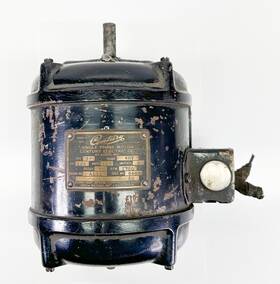
( Brand: Century ), ( Manufacturer Part Number: 6483 ), ( Part Type: Motor ), ( Rated Load: Hp ), ( Ac Phase: Single Phase ), ( Nominal Rated Input Voltage: 110 V )
Review CENTURY Single Phase Motor Sp 4hy 1/4hp 110v 60 Cycle 1750rpm Antique No
The **Century 6483 Single-Phase Motor (SP 4HY, HP, 110V, 60 Cycle, 1750 RPM)** is a meticulously crafted, vintage-inspired electric motor that seamlessly blends industrial charm with reliable performance, making it an ideal choice for both restoration enthusiasts and functional applications. This motor, likely manufactured in the mid-20th century, exudes an authentic antique aesthetic with its weathered brass terminals, sturdy cast-iron housing, and classic split-phase design, reminiscent of the robust machinery that powered early 20th-century workshops, factories, and household appliances. The **1/4 horsepower** rating ensures it delivers sufficient torque for light-duty tasks such as small workshop tools, vintage appliances, or even as a replacement for original equipment in older machinery, where precision and durability are paramount.
Built to endure, the **Century 6483** features a **110V, 60-cycle** single-phase induction motor, operating at a consistent **1750 RPM**, which provides a balanced speed suitable for a wide range of applications without excessive wear. The **split-phase capacitor-start design** ensures smooth starting torque, reducing strain on the motor and extending its operational lifespan. The motor s compact yet sturdy construction, with its **4-hy** (horizontal) mounting configuration, allows for versatile installation in tight spaces, whether in a repurposed vintage machine or a modern DIY project. The **antique finish** not only adds a touch of nostalgia but also hints at the motor s historical significance, appealing to collectors and hobbyists who appreciate the craftsmanship of an earlier era.
Despite its vintage appearance, the **Century 6483** remains fully functional, offering a reliable power source for those seeking a blend of historical authenticity and practical utility. Whether used in a restored sewing machine, an old-fashioned fan, a small lathe, or as a replacement in a classic appliance, this motor ensures quiet, efficient operation with minimal maintenance. Its enduring design reflects the engineering standards of its time built to last, with a focus on simplicity and performance. For those who value both form and function, the **Century 6483** stands as a testament to the enduring legacy of American industrial craftsmanship, offering a perfect fusion of nostalgia and dependable power.
### **Pros and Cons of Buying a Century 6483 Single-Phase Motor (1/4 HP, 110V, 60 Hz, 1750 RPM, Antique)**
#### **Pros:**1. **Reliability and Durability** Older motors, particularly well-maintained ones like the Century brand, were often built with robust materials and tighter tolerances than many modern motors. If this motor is in good condition, it may outlast newer, cheaper alternatives.
2. **Compatibility with Vintage Equipment** If you re restoring or repairing antique machinery, appliances, or tools, this motor is likely an exact or near-exact replacement part. Modern motors may not fit or function correctly in older systems.
3. **Potential for Cost Savings** If the motor is functional and in good condition, purchasing it used (rather than buying a new motor) can be significantly cheaper than a brand-new replacement.
4. **Historical or Collectible Value** Some antique motors, especially from reputable brands like Century, may hold value for collectors or enthusiasts. If you re interested in mechanical history or restoration, this could be a worthwhile acquisition.
5. **Lower Energy Consumption (If Efficient)** Older motors, particularly those designed for continuous duty, sometimes have better efficiency ratings than some modern fractional HP motors, though this varies by model.
6. **Ease of Repair** Many antique motors are simpler in design, making repairs (such as rewinding coils or replacing bearings) more straightforward for someone with mechanical skills.
7. **Aesthetic Appeal** If you re working on a project where appearance matters (e.g., a restored appliance or display piece), the motor s vintage design may add charm.
---
#### **Cons:**1. **Age and Wear** Even if the motor appears functional, it may have hidden issues such as worn bearings, degraded insulation, or failing brushes (if it s a brushed motor). Antique motors often require thorough inspection before use.
2. **Lack of Modern Safety Standards** Older motors may not meet current safety regulations (e.g., UL, CSA, or local electrical codes). If used in a modern application, they could pose risks if not properly inspected or modified.
3. **Limited Availability of Parts** Finding replacement parts (such as bearings, seals, or windings) for an antique motor can be difficult. You may need to source them from specialty suppliers or restore the motor yourself.
4. **Performance Variability** Motors from this era were not always built to modern tolerances. You may experience issues like vibration, overheating, or inconsistent speed, especially if the motor was not originally designed for continuous operation.
5. **Electrical Compatibility Issues** The motor s wiring, voltage handling, and current draw may not align perfectly with modern electrical systems. If the motor was not designed for universal use, it could fail or damage other components in a newer setup.
6. **No Warranty or Support** Since this is an antique, there is no manufacturer warranty or customer support. If the motor fails shortly after purchase, you ll be responsible for repairs or replacement.
7. **Potential for Hidden Damage** Without a professional inspection, you may not discover issues like cracked casings, corroded windings, or seized shafts until it s too late.
8. **Energy Efficiency Concerns** While some antique motors are efficient, others may consume more power than modern equivalents, leading to higher operating costs over time.
9. **Difficulty in Testing** Without specialized equipment, it can be challenging to verify the motor s health (e.g., checking for short circuits, insulation resistance, or bearing wear).
10. **Resale Value Uncertainty** Even if the motor is in good condition, its resale value may be low unless it s highly sought-after by collectors.
---
### **Conclusion:** Buying an antique Century 6483 motor can be a **good investment** if:- You have a **specific, verified need** for it (e.g., restoring a vintage appliance or machine where no modern replacement exists).
- You are **prepared to inspect, test, and possibly repair** it before use.
- You are **comfortable with the risks** of age-related failures and lack of support.
- You appreciate its **historical or aesthetic value** beyond purely functional use.
However, it is **not recommended** if:- You need a **reliable, long-term replacement** without the hassle of maintenance or potential failures.
- You lack **mechanical knowledge or tools** to assess its condition.
- You can **easily source a modern equivalent** that meets your needs at a comparable or lower cost.
- You prioritize **modern safety standards, warranties, and ease of repair**.
---
### **Recommendation:** 1. **If you proceed with the purchase:**- **Inspect it thoroughly** (look for rust, vibration, unusual noises, and check for proper voltage and current draw).
- **Test it safely** (use a multimeter to check resistance, insulation, and run it under load if possible).
- **Consider rewinding or refurbishing** if it shows signs of wear this may extend its lifespan significantly.
- **Use it in a controlled environment** where failures can be contained (e.g., not in critical machinery without backup).
2. **If you re unsure or need a motor for general use:**- **Purchase a new or reconditioned motor** from a reputable supplier (e.g., Grainger, McMaster-Carr, or a local electrical parts store). Modern motors are often more reliable, come with warranties, and are easier to repair.
- **Check for compatible modern alternatives** many manufacturers produce drop-in replacements for vintage motors.
3. **If you re restoring a vintage item:**- **Verify the motor s specifications** match your project s requirements exactly.
- **Document its condition** before use in case of future issues.
- **Have a backup plan** (e.g., a spare motor or manual controls) in case of failure.
Ultimately, the decision depends on your **specific needs, technical comfort level, and willingness to take on the risks associated with an antique motor**. If functionality and reliability are paramount, a modern replacement is likely the safer choice. If you re restoring something of historical value and can justify the effort, the Century motor may be worth the investment **but only after thorough evaluation**.
Details:
Very heavy just over 26lbs. With a rated load of 1/4 horsepower and nominal input voltage 110 volts , this motor offers efficient performance consistent power output. The Century Single Phase Motor SP 4HY 1/4HP 110V 60 Cycle 1750RPM Antique No. The single phase design ensures smooth operation, while the antique model number indicates a long history of quality and dependability.
Shaft spins freely - both oil ports open and close. Missing a few screws as shown. Very early motor - this is being sold for parts or repair. Perfect for a variety of applications, this motor from Century is valuable component any machinery or equipment requiring precise motion control.
This motor was in my parents house when they bought it I a child multiple decades ago functional at that point but has not been used very long time.
part #: 6483 price
- $300.00
specifications oelemot:
- brand: Century
- mpn: 6483
- part type: Motor
- rated load: Hp
- ac phase: Single Phase
- nominal rated input voltage: 110 V
seller oelemot:
- # reviews: 2622
- city: Framingham, Massachusetts
- rating: 99.6%
offer oelemot:
- availability: In Stock
- sold: 0
- started: February 21, 2026
- options: Ship-to-home
- quantity: 1
shipping oelemot:
- type: Calculated
- transit: 4-9 Days
- cost: $89.25
- class: Standard
- carrier: UPS
- service: UPS Ground
payments oelemot:
- other
- wallet: Apple-pay
- credit card: Visa
returns oelemot:
- policy: No Returns
general oelemot:
- condition: For parts or not working
- Industrial Automation Motion Controls > Electric Motors > General Purpose Motors
Century 6483 Is Similar To:
- 10-142715-03 Magnetek Century Ac Motor Hp Rpm (31.1% similar) 5 hp, 1725 rpm, est dims: 10X12X10. Magnetic Century ac motor 1/2 hp v 1725 rpm Sn: E44549 electrical: 200-460V, 60HZ...(February 18th, 2019)
- 165007 Century Hp Phase Ac Electric Motor Compressor Volt (34.3% similar) Century ac motor cat H887 part type SC fr RA56HZ hp ph 3 volts time cont encl DP form HM code k insula class b ABM 40 c thermally protected...(October 23rd, 2018)
- 322p116 Century Ph Rpm Electric Motor (29.8% similar) Century 1/1 0,1 15,1 20HP 115V ph 1550 rpm electric motor 322P116 model new OTHER1 10, 15 20 HP1550 RPM3. To get a correct and accurate shipping quote your destination, enter country zip postal code information into the calculator...(April 19th, 2018)
- 326p137 Oct6004 Century Motor 1-20hp (30.1% similar) ...(November 30th, 2017)
- 431 Century Ao Smith Motor Hp Rpm Cwse New 663001001560 (40.9% similar) I will never take longer than 24 hours to respond. Fast, free, insured shipping with priority mail. I am an honest, reasonable guy but do make mistakes and will often go above beyond to resolve any issues. I usually will get back to you within a few hours. I only ask a few things from you...(June 22nd, 2018)
- 6-353480-01 Century Electric Magnetek Ac Motor Used Msc (33.3% similar) Magnetic, Century electric ac motor...(July 31st, 2018)
- 6-357713-48 Magnetek Century Electric Motor Screw Pump Parts (32.1% similar) DOA stands for dead on arrival, meaning that the item did not function properly when it arrived. If you do receive the package, submit clear images of packaging box and damaged item from multiple angles. All parts, accessories, cables, etc. Do not discard the packaging. Magnetic Century 25HP 3400RPM...(March 7th, 2019)
- 6-373255-01-00 Magnetek Motor Century Ac (15.4% similar) It will cost as much to ship buy. Its much better too just pick it up. Buyer pays exact shipping charges which can be calculated after location is determined money back guarantee...(October 16th, 2017)
- 615059-001 Century New Motor Adapter (33.6% similar) New in package...(January 14th, 2018)
- 647 Century Motor (27.7% similar) Century motor H647, 3/4 hp, 1725RPM, 460V, 3PH, ten, KA56, rot le RC, ball bearing, rigid base TB57...(December 20th, 2018)
- 7-151250-01 Century Ac Motor Hp Rpm Frm (34.5% similar) Please for shipping quote...(April 29th, 2018)