ROCKWELL 62-145 Delta Motor Shaper Tools Rockwell/delta 1/2
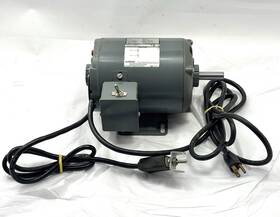
( Brand: Rockwell ), ( Manufacturer Part Number: 62-145 ), ( Part Type: Hp Motor ), ( Rated Load: Hp )
Review ROCKWELL Rockwell/delta 1/2 Hp Motor Shaper And Other Tools
The **Rockwell 62-145 Rockwell/Delta 1/2 Horsepower Motor** is a robust, high-performance electric motor meticulously engineered for demanding applications in shaper tools, milling machines, and precision machining equipment. Designed with durability and efficiency in mind, this motor delivers a reliable 1/2 horsepower output, making it ideal for medium-duty operations where consistent power and smooth operation are essential. Built with a robust **115/230V AC, single-phase** electrical configuration, it ensures compatibility with standard industrial power sources while maintaining optimal performance across a wide range of workloads. The motor features a **1725 RPM synchronous speed**, striking a balance between speed and torque to handle cutting, shaping, and finishing tasks with precision and minimal vibration.
Constructed from high-grade materials, including a **die-cast aluminum housing**, this motor is engineered to withstand the rigors of continuous use in workshop environments, where exposure to dust, debris, and temperature fluctuations is common. Its **TEFC (Totally Enclosed Fan-Cooled)** design provides superior protection against contaminants while efficiently dissipating heat through an integrated cooling fan, ensuring prolonged operational life without overheating. The motor s **ball-bearing assembly** is precision-machined for smooth, low-friction operation, reducing wear and extending the lifespan of both the motor and the connected tooling. Additionally, its **NEMA Premium efficiency rating** enhances energy savings, making it a cost-effective choice for manufacturers looking to optimize power consumption without compromising performance.
The **Rockwell 62-145** is equipped with a **direct-drive shaft** and a **standard 1-inch keyed shaft end**, allowing for seamless integration with a variety of shaper tool heads, milling attachments, and custom machining setups. Its compact yet sturdy frame, measuring approximately **5.5 inches in diameter and 7.5 inches in length**, ensures it fits neatly into tight spaces while still delivering substantial power. The motor s **overload protection** and **thermal overload relay** provide an added layer of safety, automatically shutting down in case of excessive strain to prevent damage to both the motor and the connected equipment. Whether used in small-scale workshops, industrial fabrication shops, or precision machining centers, this motor offers a perfect blend of power, reliability, and efficiency, making it a trusted workhorse for professionals who demand nothing less than excellence in their tooling.
**Pros and Cons of Buying a Rockwell 62-145 (Rockwell Hardinge) or Delta 1/2 HP Motor for Shaper Tools**
### **Pros**
1. **Reliability and Durability** Rockwell Hardinge (now part of Hardinge Group) is a well-established manufacturer known for producing high-quality, industrial-grade machinery and motors. Their motors are built to withstand heavy-duty use, making them suitable for shaper tools that require consistent performance over long periods.
2. **Compatibility with Shaper Tools** The Rockwell 62-145 is specifically designed for shaper applications, including table shapers, planers, and similar machines. It is engineered to handle the reciprocating motion and mechanical stresses associated with these tools, reducing the risk of premature failure.
3. **Power and Performance** A 1/2 HP motor provides adequate power for smaller to medium-sized shaping operations, such as woodworking, metalworking (light-duty), or general machining tasks. It strikes a balance between efficiency and workload capacity, avoiding the need for oversized motors that could be inefficient or overly expensive.
4. **Ease of Maintenance** Rockwell motors are designed with accessibility in mind, allowing for straightforward maintenance tasks like belt adjustments, bearing lubrication, and brush replacements (if applicable). Delta motors, while generally reliable, may not offer the same level of long-term support or documentation as Rockwell.
5. **Brand Reputation** Rockwell Hardinge has a strong reputation in the machining industry for quality and innovation. Their motors are often preferred in professional workshops and small-scale manufacturing environments where reliability is critical.
6. **Compatibility with Existing Systems** If you already have Rockwell or Hardinge machinery, integrating a Rockwell motor will ensure seamless compatibility in terms of wiring, mounting, and operational standards. Delta motors may require additional adapters or modifications depending on the setup.
7. **Long-Term Cost Efficiency** While the upfront cost of a Rockwell motor may be higher than some generic alternatives, its durability and lower maintenance requirements can result in cost savings over time. A well-built motor reduces downtime and replacement expenses.
---
### **Cons**
1. **Higher Initial Cost** Rockwell motors are premium products, and the 62-145 model, in particular, may be more expensive than generic or aftermarket alternatives. For budget-conscious buyers, this could be a significant drawback, especially if the motor is not absolutely necessary for the specific application.
2. **Potential Overkill for Light-Duty Use** If the shaper tool is used infrequently or for very light tasks (e.g., occasional wood shaping), a 1/2 HP motor may be more power than needed. In such cases, a smaller or less expensive motor (e.g., a 1/4 HP or 1/3 HP unit) could suffice, reducing costs without sacrificing performance.
3. **Limited Availability of Parts** While Rockwell motors are durable, finding replacement parts or service centers for older models can be challenging, particularly in regions where industrial machinery is not commonly serviced. Delta motors, being more widely available, may offer easier access to spare parts in some cases.
4. **Complexity for DIY Repairs** Rockwell motors, especially older models, may require specialized knowledge for repairs. While they are robust, troubleshooting electrical or mechanical issues without proper expertise can be time-consuming and frustrating. Delta motors, being more common, may have more readily available repair guides or forums for assistance.
5. **Energy Consumption** A 1/2 HP motor will consume more electricity than smaller motors. For users operating on tight budgets or in areas with high energy costs, this could contribute to higher operational expenses over time.
6. **Weight and Space Considerations** Industrial motors like the Rockwell 62-145 are heavier and bulkier than consumer-grade alternatives. This may require additional structural support in the shaper tool s design or installation, adding complexity to the setup.
7. **Potential for Obsolescence** As technology evolves, newer motors may incorporate advancements like variable frequency drives (VFDs), energy efficiency improvements, or digital diagnostics. Older Rockwell models may lack these features, which could limit future upgrades or customization options.
---
### **Comparison with Delta Motors**
While Delta is a well-known brand in industrial motors, their offerings are more general-purpose compared to Rockwell s specialized designs for shaping tools. Delta motors are often more affordable and widely available, making them a practical choice for users who prioritize cost and accessibility over niche applications. However, Delta motors may not be optimized for the specific mechanical stresses of shaper tools, potentially leading to shorter lifespans or performance issues in demanding environments.
For example:- **Rockwell 62-145**: Better suited for heavy-duty shaping, built for reciprocating motion, higher initial cost, but long-term reliability.
- **Delta 1/2 HP**: More versatile for general industrial use, easier to find parts, lower upfront cost, but may lack the precision engineering for shaper-specific applications.
---
### **Recommendation**
**Conclusion:**The decision to purchase a Rockwell 62-145 or a Delta 1/2 HP motor for a shaper tool depends on your specific needs, budget, and priorities. Rockwell offers superior reliability, compatibility with shaping applications, and long-term durability, making it the ideal choice for users who invest in professional-grade machinery and plan to use the shaper tool extensively. However, the higher cost and potential complexity of maintenance may not justify the purchase for casual or light-duty users.
Delta motors, while not as specialized, provide a more affordable and accessible alternative. They are suitable for general industrial use and may be a better fit for users who prioritize cost savings, ease of part replacement, or versatility across multiple applications. That said, Delta motors may not handle the mechanical stresses of shaping tools as effectively as Rockwell s dedicated designs.
**Recommendation:** - **Choose the Rockwell 62-145** if:- You are operating a shaper tool for professional or heavy-duty use (e.g., metalworking, frequent wood shaping, or commercial machining).
- You value long-term reliability, compatibility with existing Rockwell/Hardinge systems, and are willing to invest in a premium motor.
- Your budget allows for the higher upfront cost, and you have access to maintenance support or expertise.
- The motor s power (1/2 HP) aligns with the workload requirements of your shaper tool.
- **Consider a Delta 1/2 HP motor** if:- Your shaper tool is used occasionally or for light-duty tasks (e.g., hobbyist woodworking, infrequent metal shaping).
- You prioritize cost efficiency, ease of part availability, or general-purpose industrial use over specialized performance.
- You are comfortable with the potential trade-offs in durability or mechanical optimization for shaping applications.
- You plan to use the motor in a setup where compatibility with other Delta equipment is beneficial.
**Alternative Consideration:**If budget is a major concern, you might explore used or refurbished Rockwell motors, which can offer significant cost savings while retaining the brand s reliability. Additionally, if your shaper tool s power requirements are closer to 1/3 HP or 1/4 HP, a smaller motor (from either brand) could meet your needs without unnecessary power consumption.
Ultimately, the best choice hinges on balancing immediate needs with long-term usability. For most professional or dedicated shaper tool users, the Rockwell 62-145 is the stronger recommendation due to its engineering for the specific demands of shaping applications. For casual or budget-limited users, a Delta motor may suffice, provided they are aware of the potential limitations in performance and longevity.
Details:
Tested, and nicely working. The other switch that is on the motor box bypassed so only remote operates on/off, but it could be hooked up and used for more direct applications. This various Delta/Rockwell tools including sharpers saws. Rockwell/Delta 62-145 1/2 Hp Motor 3450 rpm, 8.5 amps, with remote toggle switch.
part #: 62145 prices
- $90.00-$145.00
specifications oelemot:
- brand: Rockwell
- mpn: 62-145
- part type: Hp Motor
- rated load: Hp
seller oelemot:
- rating: 99.4%
- city: Great Falls, Virginia
- # reviews: 2598
shipping oelemot:
- class: Standard
- carrier: USPS
- service: USPS Ground Advantage
- type: Calculated
- cost: $62.20
- transit: 4-9 Days
general oelemot:
- condition: Used
- Industrial Automation Motion Controls > Electric Motors > General Purpose Motors
offer oelemot:
- availability: In Stock
- quantity: 1
- sold: 0
- started: March 1, 2026
- options: Ship-to-home
- best offers: True
returns oelemot:
- paid by: Buyer
- method: Money back
- time: 30 Days
- policy: Returns Accepted
payments oelemot:
- other
- credit card: Diners-club
- wallet: Apple-pay
Rockwell 62-145 Is Similar To:
- 438-02-314-0686 Rockwell Electric Motor (36.7% similar) Works perfect, sounds great, just as shown in photos...(August 15th, 2018)
- 56 Dbsc Reliance Rockwell Dodge Brake Motor Coupling (39.3% similar) Warranty this item is guaranteed to be as described. Comes in non-original packaging. It was not tested under a load. Notes: when power was applied, this item ran very smoothly. On the ask a question link at bottom of this listing. Home contact about technology industrial lab test electrical ...(October 28th, 2018)
- 60-050 Rockwell Standard Duty Single Phase Motor Rpm (39.3% similar) The wire had some cracks and rips in it so I taped them up to keep safe. I respond very quickly. It works great, on and off switch as should. This motor was originally manufactured for a sander grinder pulley machine. If there is anything else you would like to know about the motor, please feel free...(July 29th, 2018)
- 62-012 Rockwell Electric Motor Hp Ph Rpm Shaft Model (47.5% similar) ...(March 17th, 2018)
- 62-042 Rockwell-delta Vintage 1-1-2 Hp (44.4% similar) Will work with all brands and model's that require this size motor. It has original paint. Delivery confirmation is included in the domestic shipping charges. This is a heavy duty TEFL totally enclosed fan cooled motor hp 3450 RPM5 8 keyed SHAFT115 230 volt currently wired for Rockwell delta 1 ...(July 3rd, 2017)
- 62-140 Vintage Rockwell Delta Hp Rpm Electric Motor Band Saw Lathe (51.5% similar) Motor is clean, quiet, and in excellent condition. Will work with all brands and model's of tools that require this spec motor. 1/2 hp 1725 RPM5 8 keyed SHAFT115 VOLT9. Rockwell delta 1/2 hp electric motor. Includes a power cord and on off toggle switch. Delivery confirmation is included in the ...(May 30th, 2018)
- 66-000 Rockwell Model Electric Motor (39.6% similar) Up for bid is a Rockwell model electric MOTOR1 2 HP208 volts amps. Type 75 frame will only ship to lower 48 states of the USA...(November 7th, 2018)
- 9103-0153 Rockwell Automation Max Model Brand New And Sealed (38.5% similar) Everything from breakers, motors, controllers, and fuses to testing equipment power supplies. Happy buying and god bless...(July 8th, 2018)
- P14x4815 Rockwell Automation Tefc Washdown Motor New (36.1% similar) Reliance electric P14X4815 2HP, 3PH, 460V, TEFL, FC14STC, wash down motor WYSIWYG we never warranty calibration...(September 13th, 2018)
- Qtg-3104-a 94a1696-1 Inland Motor Rockwell (23.2% similar) This part is costly and may be unavailable but the repair appears to pretty minor straight forward see pictures for actual condition. The box is original but in poor condition. One of the brushes is missing carbon, they are soldered on and should be a fairly quick inexpensive repair...(December 15th, 2017)
- Mpl-b330p-mk72aa Rockwell Automation Allen-bradley New-in-box Allen Bradley A Brushless Servo Motor 460v 5000rpm (24.2% similar) New in opened box. Shrink wrap still on the motor to the cardboard plank inside. Same day shipping on orders placed before 2PM CST. You're buying on an Allen Bradley MP B330P MK72AA sear a brush less servo motor...(August 12th, 2016)