BALDOR 31342E Permanent Magnet Motor T268148
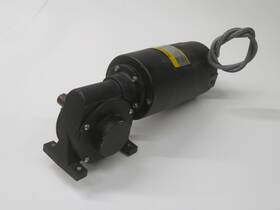
( Brand: Baldor ), ( Manufacturer Part Number: 31342E ), ( Part Type: Motor )
Review BALDOR Permanent Magnet Direct Current Motor
The **Baldor 31342E Permanent Magnet Motor (T268148)** is a high-performance, energy-efficient electric motor designed for demanding industrial applications where reliability, precision, and durability are paramount. Part of Baldor s renowned line of permanent magnet motors, this model features a robust **T-frame 268148** construction, engineered to deliver exceptional torque and efficiency while minimizing energy consumption a critical advantage in today s cost-conscious and environmentally conscious manufacturing environments. Built with a **rare-earth neodymium-iron-boron (NdFeB) permanent magnet rotor**, the motor ensures superior magnetic strength, resulting in a higher power-to-weight ratio and reduced reliance on external excitation currents, which translates to lower operating costs and extended operational lifespan. The stator windings are meticulously crafted with high-grade copper conductors, optimized for minimal resistance and maximum thermal efficiency, ensuring consistent performance even under prolonged heavy loads or variable frequency drive (VFD) operation.
This motor is equipped with a **closed, totally enclosed, fan-cooled (TEFC)** enclosure, providing robust protection against dust, moisture, and corrosive contaminants while facilitating effective heat dissipation through an integrated axial fan. The design adheres to stringent NEMA standards, ensuring seamless integration into existing conveyor systems, pumps, compressors, and other industrial machinery where precise speed control and smooth operation are essential. The **bearing assembly** incorporates high-quality sealed ball bearings, resistant to wear and contamination, further enhancing the motor s longevity and reducing maintenance requirements. Additionally, the motor s **low inertia rotor** enables rapid acceleration and deceleration, making it ideal for applications requiring frequent starts, stops, or dynamic speed adjustments, such as packaging equipment, material handling systems, or automated production lines.
For enhanced operational flexibility, the Baldor 31342E is compatible with a wide range of control systems, including variable frequency drives (VFDs), soft starters, and direct-on-line starters, allowing for tailored performance optimization based on specific application demands. Its **high-efficiency rating** often exceeding 90% reduces energy waste and operational expenses, aligning with global sustainability initiatives while delivering tangible financial benefits. The motor s compact yet sturdy frame, combined with its precision engineering, ensures minimal footprint requirements without compromising on performance, making it a space-efficient solution for tight industrial environments. Whether deployed in food processing plants, chemical manufacturing facilities, or HVAC systems, the Baldor 31342E Permanent Magnet Motor exemplifies Baldor s commitment to innovation, reliability, and operational excellence, offering a proven alternative to traditional induction motors in applications where efficiency, torque density, and low maintenance are critical.
The Baldor 31342E permanent magnet motor (T268148) is a high-performance electric motor designed for industrial applications, particularly in variable frequency drive (VFD) systems. Below is a detailed breakdown of its pros and cons, followed by a conclusion and recommendation.
---
### **Pros of the Baldor 31342E Permanent Magnet Motor (T268148)**
1. **High Efficiency**
The permanent magnet motor (PMM) design eliminates copper losses associated with wound rotor induction motors, resulting in superior energy efficiency. This translates to lower operating costs and reduced heat generation, which can extend the lifespan of the motor and associated components.
2. **Compact and Lightweight**
Permanent magnet motors are generally smaller and lighter than traditional induction motors of comparable power ratings. This makes them easier to install in space-constrained environments and reduces structural requirements for mounting and support.
3. **Improved Torque Characteristics**
PMMs provide higher torque at low speeds compared to induction motors, which is beneficial for applications requiring precise control, such as conveyors, pumps, or fans. The flat torque curve across a wide speed range enhances performance in variable-speed applications.
4. **Lower Maintenance Requirements**
Without slip rings or brushes (common in wound rotor motors), PMMs have fewer wear points. This reduces the need for routine maintenance, such as brush replacements or slip ring cleaning, leading to lower downtime and maintenance costs.
5. **Better for Variable Frequency Drive (VFD) Applications**
The motor s design is highly compatible with VFDs, as it avoids issues like rotor bar breakdown or cogging that can occur in induction motors under variable frequency conditions. This makes it ideal for applications where speed and torque need to be dynamically adjusted.
6. **Reduced Heat Generation**
The absence of rotor copper losses means less heat is generated during operation. This can simplify cooling requirements and improve reliability in high-temperature environments.
7. **Quieter Operation**
Permanent magnet motors tend to operate more quietly than induction motors, particularly at low speeds, due to reduced mechanical and electromagnetic noise.
8. **Longer Lifespan**
The robust construction and lower thermal stress contribute to a longer operational lifespan, reducing the need for premature replacements.
---
### **Cons of the Baldor 31342E Permanent Magnet Motor (T268148)**
1. **Higher Upfront Cost**
Permanent magnet motors are generally more expensive to purchase than equivalent induction motors. The cost of rare-earth magnets (such as neodymium or samarium-cobalt) and the specialized manufacturing process contribute to this higher initial investment.
2. **Sensitivity to Overheating**
While PMMs generate less heat than induction motors, they can still suffer from demagnetization if exposed to excessive temperatures. This risk requires careful thermal management, especially in applications with high ambient temperatures or frequent overloads.
3. **Limited Repair Options**
If the motor fails, repairing a permanent magnet motor can be more challenging and costly than repairing an induction motor. The magnets themselves are difficult to replace, and the motor may need to be sent back to the manufacturer for refurbishment.
4. **Potential for Magnet Demagnetization**
Exposure to strong magnetic fields, electrical surges, or high temperatures can cause the magnets to lose their magnetic properties, rendering the motor ineffective. This risk necessitates proper handling and installation practices.
5. **Compatibility with Existing Infrastructure**
If the motor is replacing an induction motor in an existing system, additional considerations may be needed. For example, the VFD or control system may require adjustments to accommodate the different motor characteristics (e.g., higher torque at low speeds).
6. **Rare-Earth Magnet Supply Risks**
The reliance on rare-earth elements (e.g., neodymium) can pose supply chain risks. Fluctuations in the availability or cost of these materials could indirectly affect the motor s cost or availability over time.
7. **Potential for Higher Inrush Current**
While generally not an issue with VFDs, in direct-on-line (DOL) applications, PMMs may draw higher inrush currents during startup compared to induction motors. This can require additional protection or sizing considerations for the electrical system.
8. **Limited Availability of Spare Parts**
Due to their specialized nature, finding replacement parts or technicians familiar with PMMs can be more difficult than with standard induction motors.
---
### **Conclusion**
The Baldor 31342E permanent magnet motor (T268148) is an excellent choice for applications where efficiency, compactness, and precise control are prioritized, particularly in variable-speed drives. Its superior torque characteristics, lower maintenance requirements, and energy savings make it a strong candidate for industries such as manufacturing, HVAC, pumps, and conveyors. However, the higher upfront cost, potential repair challenges, and sensitivity to thermal and magnetic stresses must be carefully considered.
For applications where cost is a major constraint or where the motor may be exposed to harsh conditions without adequate protection, an induction motor might be a more practical alternative. Conversely, if the application benefits from the motor s efficiency and performance advantages and the budget allows for the higher initial investment, the Baldor 31342E PMM is a highly recommended choice.
---
### **Recommendation**
**Buy the Baldor 31342E permanent magnet motor (T268148) if:**- Your application requires high efficiency, precise speed control, or operates in a variable-speed environment.
- You can justify the higher upfront cost with long-term energy savings and reduced maintenance.
- The motor will be properly protected from thermal and magnetic stresses, and you have access to technical support for installation and maintenance.
- The motor s compact size is advantageous for your installation space.
**Consider an alternative (e.g., induction motor) if:**- Budget constraints make the higher cost prohibitive, and an induction motor can meet your performance requirements.
- The application involves frequent or severe overloads, high ambient temperatures, or other conditions that could risk demagnetization.
- You lack access to specialized repair or maintenance services for permanent magnet motors.
- The motor will be used in a direct-on-line application without a VFD, and inrush current or mechanical stress concerns are significant.
Ultimately, the decision should be based on a thorough analysis of your specific application requirements, cost-benefit trade-offs, and long-term operational considerations. Consulting with an electrical engineer or motor specialist can help ensure the motor is the right fit for your needs.
Details:
Unlike the standard AC motors we discussed, this is a Permanent Magnet Direct Current motor. Extra Information:: The DCPM Permanent Magnet DC designation changes the profile of this motor significantly. We proudly sell hard-to-find parts, components, and machines to makers manufacturers. Glad you stopped by.
part #: 31342e prices
- $124.99-$450.00
specifications oelemot:
- brand: Baldor
- mpn: 31342e
- part type: Motor
seller oelemot:
- rating: 99.7%
- # reviews: 21457
- city: El Paso, Texas
payments oelemot:
- other
- wallet: Apple-pay
- credit card: Mastercard
offer oelemot:
- quantity: 1
- sold: 0
- best offers: True
- options: Ship-to-home
- availability: In Stock
- started: March 12, 2026
general oelemot:
- condition: Used
- Industrial Automation Motion Controls > Electric Motors > General Purpose Motors
returns oelemot:
- method: Money back
- paid by: Seller
- policy: Returns Accepted
- time: 30 Days
shipping oelemot:
- transit: 4-7 Days
- class: Standard, Expedited, One-day
- carrier: UPS
- service: UPS Ground, UPS 2nd Day Air, UPS 3 Day Select, UPS Next Day Air
- cost: $19.89
- type: Calculated
Baldor 31342E Is Similar To:
- 0105282922-000020 Baldor Hp Frame Phase Ac Motor Rpm (37.8% similar) 85: industrial motor Hz: 60 shaft size inch...(September 3rd, 2018)
- 01069477349-000010 Baldor Reliance Super Spl Phase Electric Motor Rpm Frame (37.3% similar) These motors are unused, but dirty and have shelf wear. These were stock from a pump company that closed down. Several of these available in similar visual condition...(January 22nd, 2019)
- 05e165w03g1 Baldor Motor With Vertex (27.4% similar) ...(February 5th, 2018)
- 07m099y788g1 Daldor New Baldor Hp Motor Phase Rpm Frame (24.6% similar) New Baldor 10 hp 575 volt 3 phase motor 3500 rpm 215TC frame 325 weight...(September 1st, 2018)
- 09e727y613g2 Baldor Lot Of Hp Phase Rpm Industrial Motor (34.8% similar) These surplus items have been excellent quality...(February 28th, 2018)
- 100063076 Peerless Baldor Industrial Blower Motor Hp Rpm Amps (28.3% similar) 25 hp, 1725 rpm. 2 amps new however has suffered very minor cosmetic damage in original shipping. Peerless industrial blower w Baldor motor...(August 15th, 2018)
- 103021-02 Baldor Hvac Variable Torque Motor Used (35.5% similar) Baldor hvac variable torque motor please refer to picture 2 for full specifications of condition: item is in good working and physical conditions. I want you to be fully satisfied with every item that purchase from me...(June 27th, 2018)
- 103204-02 Reliance Electric Baldor Phase Motor Hp Rpm (30.4% similar) M: 1725 frame: 56YZ Hz: 60 pH: 3 sear. F: 75 rating: 40C ABM-cont cc: usable at 208VBEARINGS: DE: 6205 ode: 6203ENCL: ops Sn: f sofa PO. Baldor reliance motorcar. No: spec: 35Z194P890G1 hp: 3 volts : 460 amps: 15 code: l dies: b class: FNMA Nome. 3 replaces old Lennon part NUMBERS:51W24 34W47 ...(July 10th, 2018)
- 10e106x354h1 Baldor Electric Motor New In Crate (34% similar) Up for sale is 1 Baldor model VM2394T electric motor, 15-HP, 3450-RPM, 3-PH - new in the crate...(November 28th, 2018)
- 10h292y73061 Baldor Industrial Hp Motor Cat Frame (31.5% similar) New price through Baldor is ECP4102T 20HP, 1180RPM, 3PH, 60HZ, 286T, 1054M, TEFL, f1 output 20. Hp phase 3 synchronous speed 1,200 rpm frequency 60. Hz voltage 460 v, 230 v frame material iron 286T PX class and group none division ii brand Baldor-reliance. Motor is sold as-is...(April 23rd, 2018)
- 114367 Baldor New Hp Phase Motor (39.6% similar) Please see motor name plate for details photos are actual...(June 23rd, 2018)