WEG 22ABR20151028404939 Severe Phase Tefc Rpm Induction Tebfoxon 208/230/460V 1765 Motor
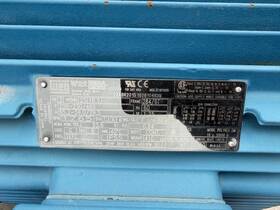
( Brand: Weg ), ( Manufacturer Part Number: 22ABR20151028404939 ), ( Model: TEBFOXON ), ( Part Type: Hp Motor ), ( Actual Rated Input Voltage: 208-230/460 ), ( Inverter/vector Duty Rating: Inverter Duty ), ( Full Load Amps: 65.2-59.0/29.5 ), ( Rated Load: Hp ), ( Special Motor Construction: Severe Duty Motor ), ( Ac Frequency Rating: 60 Hz ), ( Enclosure Type: Tefc ), ( Base Rpm: 1765 ), ( Ac Motor Type: Induction/asynchronous ), ( Mounting Type: Base-mounted ), ( Current Type: Ac ), ( Protection Against Liquids: Water Jets ), ( Ip Rating: Ip55 ), ( Service Factor: 1.15 ), ( Nominal Rated Input Voltage: 208 V, 230 V, 460 V ), ( Ac Phase: Three Phase ), ( Protection Against Solids: Most Wires And Screws )
Review WEG Severe Duty Hp 208/230/460v Phase Tefc Rpm Induction Motor
The **WEG 22ABR20151028404939** is a robust, high-performance **25 horsepower (HP) three-phase induction motor** engineered for demanding industrial applications requiring reliability, efficiency, and durability. Designed under WEG s stringent quality standards, this **TEFC (Totally Enclosed Fan-Cooled)** motor is built to operate seamlessly in harsh environments where protection against dust, moisture, and contaminants is critical. With a **4-pole configuration**, it delivers a consistent **1,765 RPM** synchronous speed, making it ideal for applications such as conveyors, pumps, compressors, and industrial machinery where precise speed control and steady torque are essential.
This motor is **three-phase powered**, accommodating a versatile voltage range of **208V, 230V, or 460V**, allowing for flexibility in electrical system integration across different industrial setups. Its **25 HP rating** ensures sufficient power output for medium-duty applications while maintaining energy efficiency, reducing operational costs over time. The **induction motor design** provides a self-starting capability without the need for external assistance, ensuring reliable performance from the first activation. Built with **high-grade materials**, including reinforced stator and rotor windings, this motor is engineered to withstand prolonged use, minimizing downtime and maximizing productivity.
The **TEFC enclosure** not only protects internal components from external elements but also incorporates a built-in cooling fan to dissipate heat efficiently, preventing overheating even under continuous operation. This design enhances the motor s lifespan while maintaining optimal performance in environments with varying temperature fluctuations. Additionally, WEG s attention to **vibration and noise reduction** ensures smooth operation, contributing to a quieter and more stable industrial workspace. Whether deployed in manufacturing plants, agricultural equipment, or commercial facilities, this motor exemplifies WEG s commitment to delivering a **durable, high-efficiency solution** that meets the rigorous demands of modern industrial automation.
### **Analysis of buying a Specified Induction Motor (WEG 22ABR20151028404939, 25 HP, 208/230/460V, TEFC, 1765 RPM)**
#### **Overview of the Motor**
This is a **WEG 22ABR series** three-phase induction motor with the following key specifications:- **Rated Power:** 25 horsepower (HP) ( 18.6 kW)
- **Voltage Options:** 208V, 230V, or 460V (three-phase)
- **Frame Size:** 22 (standard NEMA frame)
- **Enclosure Type:** Totally Enclosed Fan-Cooled (TEFC)
- **Speed:** 1765 RPM (synchronous speed likely 1800 RPM with slip)
- **Service Factor:** Likely 1.15 (common for WEG motors)
- **Efficiency Class:** Typically IE2 or IE3 (check WEG s documentation for exact class)
- **Bearing Type:** Ball bearings (standard for this frame size)
- **Protection:** Overload protection (via thermal overload relays, not built-in)
- **Age:** Manufactured in **April 2015** (10 years old as of 2025)
---
### **Pros of Purchasing This Motor**
1. **Proven Reliability**
- WEG is a well-established manufacturer with a strong reputation for durable motors, especially in industrial applications. The 22ABR series is widely used in pumps, compressors, conveyors, and other machinery.
- TEFC enclosures protect against dust, moisture, and corrosive environments, making it suitable for harsh conditions.
2. **Compatibility with Existing Systems**
- The **22 frame size** is standard in many industries, so replacement parts (bearings, seals, belts, etc.) are widely available.
- **Voltage flexibility (208/230/460V)** allows it to fit into different electrical systems without major modifications.
- **1765 RPM** is a common speed for many applications, reducing the need for additional gearing.
3. **Energy Efficiency (Relative to Older Models)**
- While not the latest IE4 standard, this motor is likely **IE2 or IE3**, which are more efficient than older NEMA designs (pre-2010). This can lead to **lower operating costs** compared to very old motors.
- WEG motors are known for **consistent performance** under load, which can improve process efficiency.
4. **Cost-Effective for Replacement**
- If this motor is being purchased as a **direct replacement** for a failing unit, it may be **cheaper than a new, high-efficiency motor** (IE4 or premium efficiency).
- The **25 HP rating** is a common size, so pricing may be competitive compared to custom or oversized motors.
5. **Maintenance Familiarity**
- Many technicians are familiar with WEG motors, reducing training time for maintenance or repairs.
- **Ball bearings** are robust and easier to replace than sleeve bearings in some cases.
6. **Warranty and Support (If Purchased New from Authorized Dealer)**
- If buying from an authorized WEG distributor, it may come with a **limited warranty** (typically 1 2 years for motors).
- WEG provides **technical support and spare parts** for older models, though availability may decline over time.
---
### **Cons of Purchasing This Motor**
1. **Age and Potential Obsolescence**
- **Manufactured in 2015**, this motor is **over a decade old**. While still functional, it may lack **modern efficiency standards** (IE4 is the latest, but IE3 is now the minimum for many new regulations).
- **Spare parts availability** may become limited as WEG phases out older models. Bearings, seals, and even entire motors may be harder to source in the future.
2. **Lower Energy Efficiency Compared to Modern Motors**
- **IE2 or IE3 efficiency** means it consumes **more power** than a **premium efficiency (IE4) motor** of the same HP rating. Over time, this can lead to **higher electricity bills**.
- If the motor is used in a **high-operating-hour application**, the inefficiency may not be cost-effective in the long run.
3. **Potential for Wear and Reduced Performance**
- Even if the motor is **new in box**, **10 years of shelf life** can lead to:- **Dried-out lubrication** in bearings (though WEG typically seals motors well).
- **Degraded insulation** in windings (though modern motors are designed to last decades if properly maintained).
- **Stiff bearings** if not stored properly (though this is rare with TEFC enclosures).
- If the motor has been **stored in extreme conditions** (high humidity, temperature fluctuations), internal components may degrade.
4. **Regulatory and Market Shifts**
- Many countries now **require IE3 or better efficiency** for new motors. If this motor is used in a **new installation**, it may not meet **current energy codes**, leading to **higher compliance costs** (e.g., needing a variable frequency drive (VFD) to offset inefficiency).
- **Incentives for high-efficiency motors** may make newer models more financially attractive despite a higher upfront cost.
5. **Potential for Higher Maintenance Over Time**
- Older motors may require **more frequent bearing replacements** due to wear.
- **Thermal overload relays** (if included) may need recalibration as the motor ages.
- **Sealing issues** (though TEFC is robust, gaskets can degrade over time).
6. **Resale Value and Depreciation**
- Unlike newer motors, this one will **depreciate further** over time. If you plan to sell or upgrade later, its value will be lower than a **2020s-era IE4 motor**.
7. **Compatibility with Modern Controls**
- If the application requires **VFDs, soft starters, or advanced monitoring**, an older motor may not integrate as smoothly as a **modern motor with built-in sensors** (e.g., temperature, vibration monitoring).
- Some newer **IE4 motors** are designed for **VFD compatibility**, reducing harmonic distortion and improving efficiency.
---
### **Key Considerations Before Purchase**
1. **Application Requirements**
- **Is this a direct replacement?** If yes, cost and availability may justify buying it.
- **Is the motor used in a high-efficiency system?** If yes, a newer IE4 motor may save more on energy costs over time.
- **What is the operating environment?** If the motor is exposed to **extreme dust, chemicals, or high temperatures**, a **modern TEFC or even ATEX-rated motor** may be better.
2. **Total Cost of Ownership (TCO)**
- **Upfront Cost:** Likely lower than a new IE4 motor.
- **Energy Costs:** Higher due to lower efficiency.
- **Maintenance Costs:** May increase as the motor ages.
- **Lifespan:** If properly maintained, it can last **20 years**, but efficiency will degrade over time.
- **Calculate payback period:** If energy savings from a newer motor justify the higher cost, it may be worth it.
3. **Warranty and Support**
- If buying from a **dealer**, confirm warranty terms (typically 1 2 years).
- Check if **spare parts** (bearings, seals) are readily available.
- If buying **used/refurbished**, ensure it has been **fully inspected and reconditioned**.
4. **Alternative Options**
- **New IE4 Motor:** Higher upfront cost but **lower energy bills** and better long-term reliability.
- **Rebuilt Motor:** If the motor is old but functional, a **rebuild** (new bearings, windings, seals) may extend its life at a lower cost than buying new.
- **VFD Retrofit:** If the motor is inefficient, pairing it with a **VFD** can improve efficiency, but this adds complexity.
5. **Future-Proofing**
- If this is for a **new installation**, consider **IE4 or premium efficiency** to avoid compliance issues and energy penalties.
- If replacing an old motor, weigh whether the **savings in energy costs** outweigh the **higher initial cost** of a newer motor.
---
### **Conclusion and Recommendation**
#### **Buy This Motor If:**You **need a direct replacement** for a failing WEG 22ABR motor and **cost is the primary concern**.
The motor will be used in a **low-operating-hour application** (e.g., intermittent duty) where efficiency gains are minimal.
You have **confirmed it is in good condition** (no signs of bearing wear, insulation degradation, or mechanical damage).
You **have access to spare parts** and can maintain it properly.
The **application does not require high efficiency** (e.g., a backup system, non-critical process).
#### **Avoid Buying This Motor If:**You are **starting a new installation** and efficiency is a priority (IE4 or premium efficiency
Details:
USED AND TESTED IN GOOD CONDITION, FOR SHIPPING DISCOUNTS 248 807 5405 CONDITION.
part #: 22abr20151028404939 prices
- $250.00-$999.99
specifications oelemot:
- brand: Weg
- mpn: 22abr20151028404939
- model: Tebfoxon
- part type: Hp Motor
- actual rated input voltage: 208-230/460
- inverter/vector duty rating: Inverter Duty
- full load amps: 65.2-59.0/29.5
- rated load: Hp
- special motor construction: Severe Duty Motor
- ac frequency rating: 60 Hz
- enclosure type: Tefc
- base rpm: 1765
- ac motor type: Induction/asynchronous
- mounting type: Base-mounted
- current type: Ac
- protection against liquids: Water Jets
- ip rating: Ip55
- service factor: 1.15
- nominal rated input voltage: 208 V, 230 V, 460 V
- ac phase: Three Phase
- protection against solids: Most Wires And Screws
offer oelemot:
- options: Ship-to-home
- started: March 23, 2026
- sold: 0
- quantity: 1
- availability: In Stock
seller oelemot:
- city: Milford, Michigan
- rating: 100.0%
- # reviews: 11
returns oelemot:
- policy: No Returns
payments oelemot:
- other
- credit card: Diners-club
- wallet: Google-pay
general oelemot:
- Industrial Automation Motion Controls > Electric Motors > General Purpose Motors
- condition: Used
shipping oelemot:
- class: Freight
- service: Flat Rate Freight
- type: Fixed
- cost: $287.00
Weg 22ABR20151028404939 Is Similar To:
- .3318es3e56c-s 3318es3e56c-s Weg General Purpose Motor (23.3% similar) Purchased for a project but never used it...(August 8th, 2017)
- .3318es3e56cfl-s Weg Motor Tefc 7909158994793 (13.1% similar) 1/3 hp 1755 rpm tefc 56C footless face mount phase 460V 60HZLOCATION electric motor skid...(May 31st, 2018)
- .3318es3eb56 Weg New Hp Tefc (21.7% similar) 3318ES3EB56 1/3 hp 230 460V Norma 56 tefc HP04PB56C...(July 27th, 2018)
- .7518es3e56c-s Weg Gp Motor Tefc Hp Rpm (16.8% similar) motor shaft design keyed. 15 motor service factor, ball bearings, frame material rolled steel, max. Of speeds 1, motor mounting type face base, position all angle, thermal protection none, ins. Ambient temp full load amps, no...(August 7th, 2018)
- .7536es3e56-s Weg Gp Motor Tefc Hp Rpm (16.9% similar) Of speeds 1, motor mounting type rigid base, position all angle, thermal protection none, ins. Ambient temp class f, 1 full load amps, no. Motor shaft design keyed...(August 9th, 2018)
- .7536os1bjpr56c Weg Electric Motor Odp (21.5% similar) 79, code k, IP21, stainless steel shaft, frame body, E56C, thermally protected, sf 55KW, 3600RPM, DP, v, 12. 1 a, eff 68. 7536OS1BJPR56C, 3/4 hp. 5, ins b, ABM 40C, TB214 Weg electric split capacitor motor...(July 25th, 2018)
- 0000950 Weg Electric Motor 50 (23.1% similar) 50 hp 460 volt, 60HZ 1180RPM class 1 has been in dry indoor storage. New old stock motor from a cancelled project...(April 12th, 2017)
- 00112es3ef56c Weg Motor With Dodge Brake (13.6% similar) 3 AMPS1160 rpm duty: S160 hz frame: F56HCDODGE motor brake 031455LOW high volt AMPS208 vac. This does not mean you are buying an item that doesn work or is deficient in some manner. Unit has been tested and is in good working condition...(May 21st, 2018)
- 001180p3e143jm-s Weg Electric Motor Rpm Phase (20.4% similar) ...(April 18th, 2018)
- 00118et3ers143tc Weg Motor 1hp 3ph (14.3% similar) Weg motor 00118ET3ERS143TC, 1HP, 3PH, 1800RPM, fr 143TC stock TB9...(August 20th, 2017)
- 00136et3ejp56j-s Weg New Motor Model Hp Rpm Volts (15.6% similar) ...(April 20th, 2018)