TAMAGAWA 17484-6-00 Seiki Ac Servo Motor 3HAC 17484-6/00
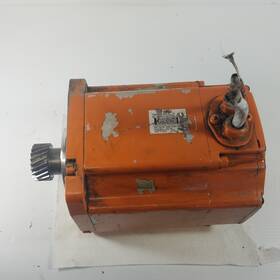
( Brand: Tamagawa ), ( Manufacturer Part Number: 17484-6/00 ), ( Model: 3HAC 17484-6/00 ), ( Part Type: Ac Servo Motor )
Review TAMAGAWA 17484-6/00 Seiki Ac Servo Motor
The **Tamagawa 17484-6/00 SEIKI 3HAC AC Servo Motor** is a high-performance, precision-engineered electric actuator designed for demanding industrial applications where reliability, efficiency, and seamless integration are paramount. Part of Tamagawa s renowned SEIKI series, this servo motor combines cutting-edge technology with robust construction to deliver exceptional torque, smooth motion control, and long-term durability. Built with a compact yet robust housing, the 3HAC model features a **3-phase AC synchronous design**, optimized for high-speed operation and precise positioning with minimal mechanical play. Its **IP65-rated enclosure** ensures protection against dust, dirt, and moisture, making it suitable for harsh environments such as manufacturing plants, automation systems, and CNC machinery where environmental resilience is critical.
At the heart of this servo motor lies a **high-efficiency permanent magnet rotor**, paired with a **high-precision winding stator** that minimizes energy loss and maximizes torque output across a wide operational range. The motor s **vector control capability** allows for dynamic response to varying load conditions, enabling smooth acceleration, deceleration, and velocity adjustments with near-instantaneous feedback. This makes it ideal for applications requiring tight synchronization, such as robotics, packaging systems, textile machinery, or conveyor belts where precise timing and repeatability are essential. The **built-in encoder feedback system** (typically a high-resolution incremental or absolute encoder, depending on the variant) ensures real-time position and speed monitoring, enhancing the motor s compatibility with advanced PLCs, CNC controllers, and motion control systems.
One of the standout features of the 3HAC series is its **modular and scalable design**, allowing for easy integration into existing automation frameworks. The motor s **flange-mounted configuration** (with options for various mounting styles, including foot, flange, or shaft-mounted variants) simplifies installation and alignment, reducing setup time and maintenance overhead. Additionally, its **wide operating temperature range** (typically -10 C to 60 C, though specifications may vary by model) ensures consistent performance in temperature-fluctuating environments, while its **low-vibration operation** contributes to quieter, more stable system performance. The motor s **energy-saving features**, such as regenerative braking and adaptive torque control, further enhance its efficiency, reducing operational costs and extending the lifespan of associated drive systems.
For industries prioritizing precision and longevity, the **SEIKI 3HAC** also incorporates **high-grade materials** in its construction, including corrosion-resistant coatings and reinforced bearings to withstand heavy-duty cycling without compromising performance. Its **compatibility with a wide range of servo amplifiers and drives** (such as Tamagawa s own SEIKI or third-party systems like Siemens, Yaskawa, or Allen-Bradley) ensures seamless integration into diverse control architectures. Whether deployed in high-speed cutting applications, automated assembly lines, or material handling systems, this servo motor delivers the **consistency, torque density, and reliability** expected from a premium industrial actuator. With its blend of innovation, durability, and adaptability, the Tamagawa 17484-6/00 SEIKI 3HAC AC Servo Motor stands as a cornerstone for next-generation automation, empowering engineers to achieve higher productivity and precision in their processes.
The **Tamagawa 17484-6/00 SEIKI 3HAC AC Servo Motor** is a high-performance servo motor commonly used in industrial automation, robotics, and precision motion control applications. Below is a detailed breakdown of its pros and cons, followed by a conclusion and recommendation.
---
### **Pros of the Tamagawa 17484-6/00 SEIKI 3HAC AC Servo Motor**
1. **High Precision and Accuracy**
The motor is designed for high-resolution positioning, making it ideal for applications requiring fine control, such as CNC machines, pick-and-place robots, and packaging systems. Its feedback system (often integrated with encoders) ensures minimal positional error.
2. **Reliable and Durable Construction**
Tamagawa (a subsidiary of SEIKI) is known for robust industrial motors. This model features a sturdy enclosure, high-quality bearings, and a sealed design to resist dust, moisture, and contaminants, which is crucial in harsh manufacturing environments.
3. **Wide Range of Power and Torque Options**
The 3HAC series offers multiple models with varying power ratings (e.g., 0.5 kW to 7.5 kW), allowing selection based on specific torque and speed requirements. This flexibility makes it adaptable to different applications, from light-duty automation to heavy-duty machining.
4. **Energy Efficiency**
AC servo motors like this one are generally more energy-efficient than traditional DC motors, especially when paired with modern inverters. They reduce energy waste through optimized torque control and regenerative braking capabilities.
5. **Compatibility with Advanced Control Systems**
The motor is designed to work seamlessly with servo drives and PLCs (Programmable Logic Controllers), enabling complex motion profiles, synchronization, and closed-loop control. This makes it suitable for automated production lines and robotic systems.
6. **Low Maintenance Requirements**
Due to its sealed design and high-quality components, the motor requires minimal maintenance compared to open-frame motors. This reduces downtime and operational costs in industrial settings.
7. **Fast Response Time**
AC servo motors excel in dynamic applications where quick acceleration, deceleration, and direction changes are necessary. This is particularly valuable in applications like 3D printing, textile machinery, or high-speed packaging.
8. **Global Availability and Support**
Tamagawa/SEIKI has a strong presence in industrial markets, offering local support, spare parts, and technical assistance. This ensures easier troubleshooting and longer-term reliability.
9. **Noise and Vibration Reduction**
The motor is engineered to minimize mechanical noise and vibration, which is beneficial in environments where quiet operation is critical (e.g., medical equipment or precision assembly lines).
10. **Scalability for Integration**
The motor s standardized interfaces (e.g., flange mounts, communication protocols like EtherCAT, Profibus, or Modbus) make it easy to integrate into existing or new automation systems without major modifications.
---
### **Cons of the Tamagawa 17484-6/00 SEIKI 3HAC AC Servo Motor**
1. **Higher Initial Cost**
Compared to standard AC induction motors or lower-end servo motors, this model carries a premium price. The advanced features, precision, and reliability come at a higher upfront cost, which may be a barrier for small businesses or startups with limited budgets.
2. **Complex Installation and Setup**
Servo motors require compatible servo drives, programming, and sometimes additional sensors (e.g., encoders). The setup process can be more complex than installing a simple induction motor, necessitating skilled technicians or engineers.
3. **Dependence on Servo Drives**
The motor s performance is heavily dependent on the quality and compatibility of the paired servo drive. Mismatched drives can lead to inefficiencies, overheating, or even motor damage. This adds another layer of cost and consideration.
4. **Limited Lifespan Compared to Induction Motors**
While durable, servo motors may have a shorter lifespan than robust induction motors in very high-duty-cycle applications (e.g., continuous 24/7 operation without maintenance). However, this is often offset by their higher efficiency and precision.
5. **Potential for Overheating in Heavy Loads**
If the motor is operated beyond its rated torque or speed limits without proper cooling or drive adjustments, it can overheat. This risk is mitigated by using the correct drive settings and ensuring adequate ventilation.
6. **Sensitivity to Electrical Noise**
Servo motors and drives can be susceptible to electrical interference from nearby machinery or poor wiring. Proper shielding and grounding are necessary to avoid performance issues or motor failure.
7. **Higher Energy Costs During Startup**
While the motor is energy-efficient during steady operation, the initial acceleration phase can draw significant current, leading to higher short-term energy consumption. This is less of an issue in applications with frequent stops and starts.
8. **Limited Availability of Aftermarket Parts**
While Tamagawa/SEIKI parts are generally reliable, finding aftermarket replacements or upgrades for specific components (e.g., bearings, windings) may be challenging compared to more common motor brands.
9. **Learning Curve for Operators**
Operating and maintaining servo systems requires specialized knowledge. Training may be necessary for personnel to fully utilize the motor s capabilities without causing errors or damage.
10. **Overkill for Simple Applications**
For basic motion control tasks (e.g., conveyor belts with constant speed), a servo motor may be unnecessarily complex and expensive. In such cases, a simpler AC induction motor or stepper motor might suffice.
---
### **Conclusion**
The **Tamagawa 17484-6/00 SEIKI 3HAC AC Servo Motor** is a high-performance, reliable choice for applications demanding precision, speed, and efficiency. Its strengths lie in its accuracy, durability, energy savings, and compatibility with advanced automation systems. However, its higher cost, complexity, and specific requirements make it less suitable for budget-conscious or simple applications.
The decision to purchase this motor should be based on:- **Application needs**: Does the project require high precision, dynamic control, or synchronization?
- **Budget**: Can the upfront and operational costs be justified by the motor s benefits?
- **Infrastructure**: Is the facility equipped with compatible drives, control systems, and maintenance capabilities?
- **Long-term goals**: Will the motor support future scalability or upgrades?
If these factors align with your requirements, the 3HAC series is an excellent investment. Otherwise, alternatives like stepper motors, brushless DC servo motors, or induction motors may be more appropriate.
---
### **Recommendation**
**Buy the Tamagawa 17484-6/00 SEIKI 3HAC AC Servo Motor if:**- You are working on **precision automation, robotics, or CNC machining** where positional accuracy and repeatability are critical.
- Your application involves **complex motion profiles, high-speed operations, or synchronization with other axes**.
- You have **access to a compatible servo drive and control system**, and your team has the expertise to set it up and maintain it.
- The **long-term cost savings from efficiency and reduced downtime** outweigh the higher initial investment.
**Consider alternatives if:**- Your budget is constrained, and a **simpler or lower-cost motor** (e.g., a stepper motor or induction motor) can meet your needs.
- Your application is **low-speed and low-torque**, where a servo motor s complexity is unnecessary.
- You lack **technical resources** to properly install, program, or troubleshoot the motor.
- The environment is **extremely harsh** (e.g., high vibration or extreme temperatures), where a more rugged motor (e.g., explosion-proof or high-torque variant) may be required.
For most **industrial automation, robotics, or high-precision manufacturing** applications, this motor is a **strong and justified choice**. Pair it with a reputable servo drive (e.g., from SEIKI, Yaskawa, or Siemens) and ensure proper training for your team to maximize its benefits.
Details:
Tamagawa Seiki 3HAC 17484-6/00 AC Servo Motor. Tamagawa Seiki Servo Motor, model: 3HAC 17484-6/ Used, untested, shows wear. Need a part ASAP.
part #: 17484600 prices
- $750.00-$1100.00
specifications oelemot:
- brand: Tamagawa
- mpn: 17484-6/00
- model: 3hac 17484-6/00
- part type: Ac Servo Motor
seller oelemot:
- # reviews: 10218
- city: Seymour, Indiana
- rating: 99.6%
returns oelemot:
- policy: Returns Accepted
- paid by: Buyer
- method: Money back
- time: 30 Days
shipping oelemot:
payments oelemot:
- other
- wallet: Apple-pay
- credit card: Mastercard
offer oelemot:
- availability: In Stock
- started: March 26, 2026
- sold: 0
- quantity: 1
- best offers: True
- options: Seller-arranged-local-pickup
general oelemot:
- condition: Used
- Industrial Automation Motion Controls > Electric Motors > General Purpose Motors
Tamagawa 17484-6-00 Is Similar To:
- 4073n9e31 Tamagawa Seiki Servo Ac Motor Driver Model (53.6% similar) Guaranteed working. Tamagawa seiki 4073N9E31 servo ac motor 300W driver 200V model TB-s used, excellent condition. Shipping Argo-tech only ships to the USA. Device has no connectors. Whats included: 1x Tamagawa seiki 4073N9E31 servo ac motor 300W driver 200V model TB-s...(December 19th, 2018)
- 3hawc116593 Abb Ac Servo Tamagawa Motor New In Open Box (38% similar) ...(September 29th, 2016)
- Au6550n2041 Tamagawa Seiki Tbl Servo (51.9% similar) Used condition jug Tamagawa seiki TB servo motor driver model: AU6550N2041 voltage : ac 200V inventory number: 1C10299-1-17...(July 28th, 2017)
- Brx Fa-solver 800123-r Tamagawa Seiki (34.1% similar) width : 7 in. We choose the carrier. height : 7 in. Domestic shipping price is shown for us lower 48 states. We get hundreds of items in daily, if don't have it today check back tomorrow. After the return period has ended, you can no longer product. Need it urgently. Next day second air services ...(May 6th, 2017)
- Ha83c-s A84363s Mitsubishi Electric Tamagawa Seiki Co Permanent Magnet Ac Servo Motor Z 637260 With Tamaga (41.1% similar) Golden services condition used, no box. Handling charge for palatalization. Manufacturer Mitsubishi electric corp. Removed from a functioning system may show signs of use or shelf wear. Type permanent magnet ac servo motor model HA83CMANUAFACTURER Tamagawa seiki co...(September 20th, 2016)
- Mros900154-ts4512n4020e200 Tamagawa Seiki Ac Servo Motor New No Box (51.8% similar) If another carrier such as ups or FedEx is required to ship due the size, then shipping costs may change...(August 26th, 2018)
- Ts 3029n3e106 Tamagawa Seiki Dc (42.1% similar) This item is used. Marketing, listing apps, application. Tamagawa seiki gifts 3029N3E106 dc servomotor resolver 36 v 200 w TS3029N3E106 manufacturer: seiki model: 3029N3E106TYPE: watt: 200 voltage : CDC used, in working condition...(July 8th, 2017)
- Ts2641n121e268 Tamagawa Seiki Ts Encoder (44.7% similar) This item is used. Tamagawa seiki TS2641N121E268 gifts encoder A10848 BR smart syn 2641N121E268 manufacturer: model: TS2641N121E268TYPE: used, in working condition. Marketing, listing apps, application...(October 7th, 2017)
- Ts3741n3e8 Tamagawa Dc Motor Encoder (39.5% similar) ...(October 2nd, 2019)
- Tamagawa 6594512 Used And Tested 659-451-2 Magnetic Spindle Motor Encoder (40.7% similar) All shipping charges are not negotiable. Used tested Tamagawa 659-451-2 magnetic spindle motor encoder encoder. Package content. Product feature. How many months warranty do you provide. 1 x used tested Tamagawa 659-451-2 magnetic spindle motor encoder. Do remember sign your rma# on the front of ...(August 12th, 2024)
- Tamagawa Ts466n61e17 Lot Of 3 Vintage U.s Navy-bureau Ordnance Synchro Motor Mark 8 Mod 1b (38.2% similar) Part #: Tamagawa TS466N61E17 for sale...(November 6th, 2024)